Stay Informed About Industry News And Follow ZhiShun Updates
 2025-11-28

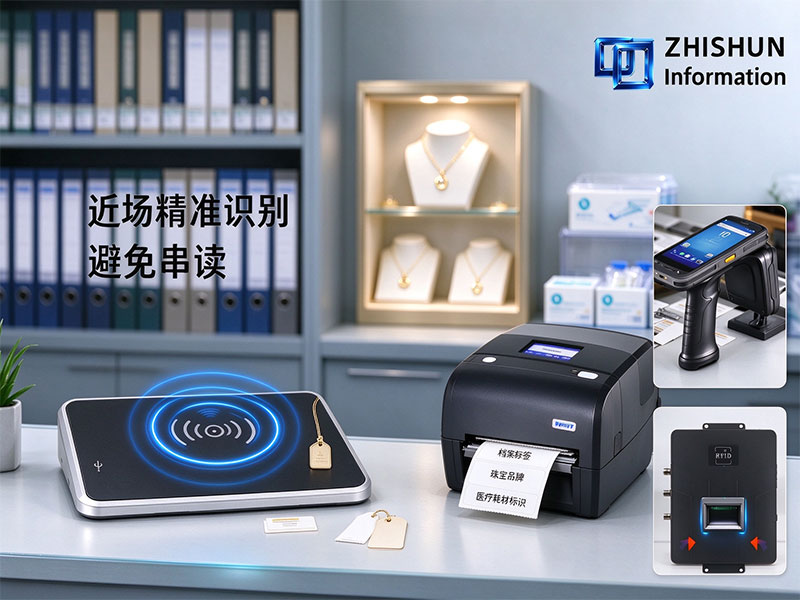
Image Suggestion: Refined-scenario photo | Close-up of desktop reader identifying tags on countertop and RFID printer outputting archive tags, minimalist counter background for archives or jewelry
Image Caption: RFID desktop readers and RFID printers are widely used in refined management of high-value assets such as archives and jewelry, with controlled reading range to prevent misidentification caused by cross-reading tags.
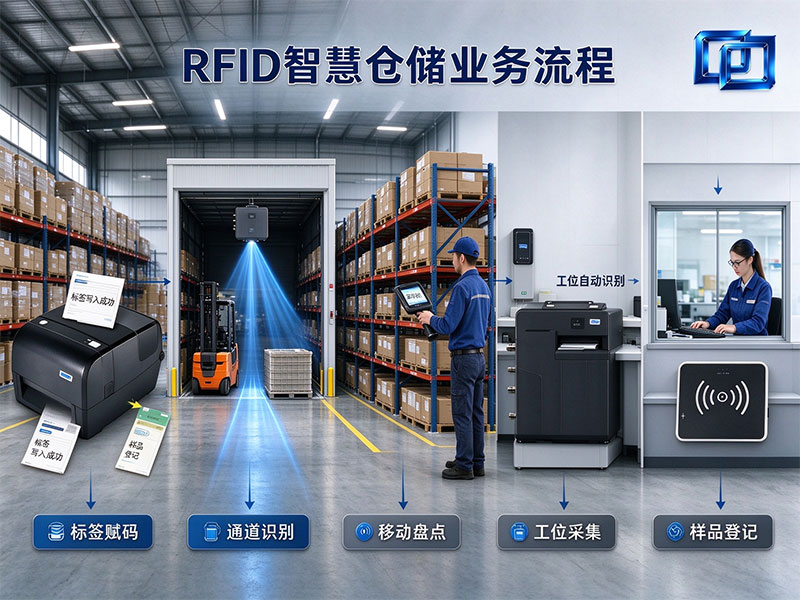
In the early stage of UHF RFID adoption, market demand was concentrated in large logistics and factory channel long-distance batch identification, dominated by RFID fixed readers and long-range handheld readers. In recent two years, fast growth in segmented markets including archive management, jewelry & luxury goods, medical devices, bills & certificates and high-value tool assets has driven surging demand for RFID desktop readers and RFID printers, forming a new growth point of the industry.
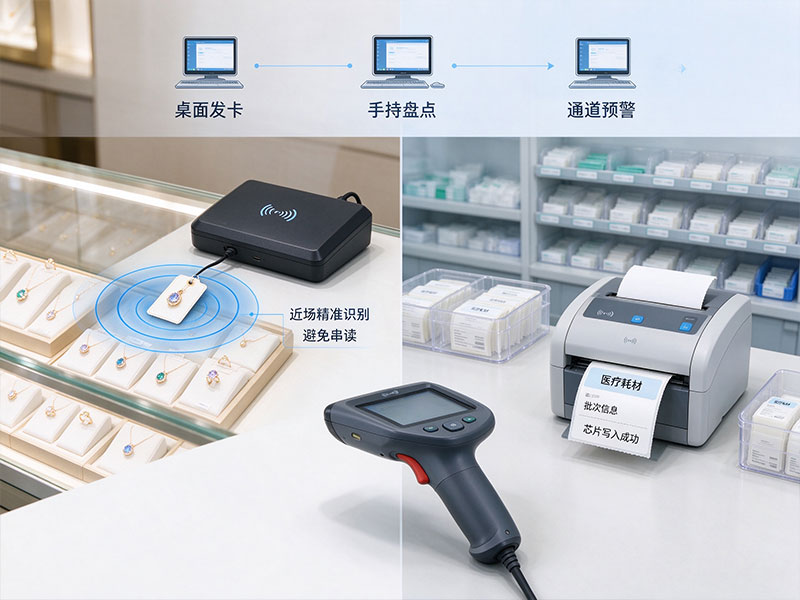
These segmented scenarios share a common feature: long-distance reading of over ten meters is unnecessary; instead, “misreading and cross-reading” must be avoided. Only tags placed in the designated countertop area should be identified. With specially designed antennas and RF algorithms, RFID desktop readers strictly limit the reading range to the countertop area and effectively prevent misreading of surrounding tags, making them ideal for counter registration, single-item verification and tag encoding.
RFID printers are the fundamental hardware for such refined projects. Archive labels, jewelry hang tags and medical consumable identifiers not only require data written into RFID chips, but also printed serial numbers, QR codes and names to realize one-object-one-code visualization for manual verification. Tag quality, write success rate and printing clarity directly determine the stable operation of the whole subsequent RFID system.
Moreover, such projects usually require a hardware portfolio rather than a single device: RFID integrated readers for entrance alert and RFID handheld readers for regular full inventory, forming the mode of “desktop encoding + channel alert + handheld inventory”.
Industry observation shows that the RFID market will keep diverging in the future: large warehousing and manufacturing sectors pursue fixed readers with long reading range and high throughput; while high-value asset, archive and jewelry retail tracks will continuously move toward short-range precise identification, and lightweight RFID hardware for desktop reading and tag printing will enjoy expanding market space.

Scan To Add

Scan To Add
Copyright © 2026 Shenzhen Zhishun Information Technology Co., Ltd All Rights Reserved.
Technical Support:SYSX





 182-7997-4925

 Home