Stay Informed About Industry News And Follow ZhiShun Updates
 2025-11-28

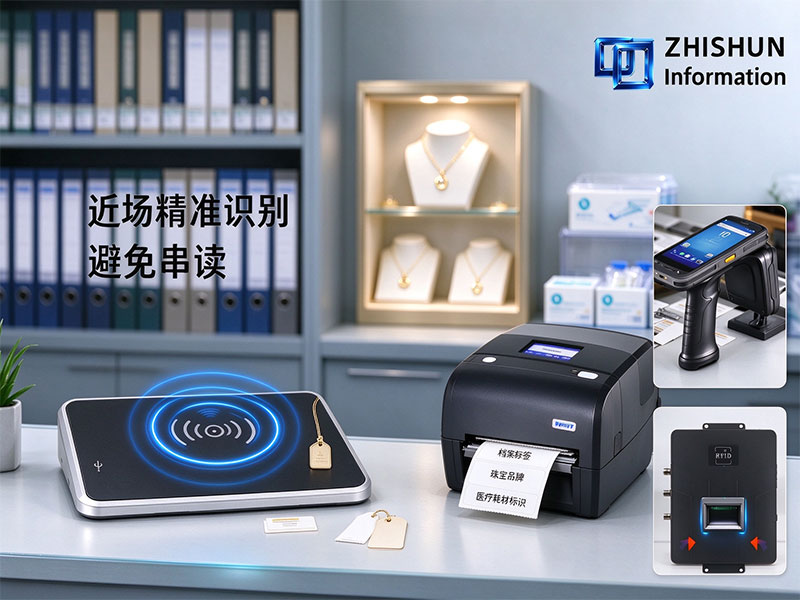
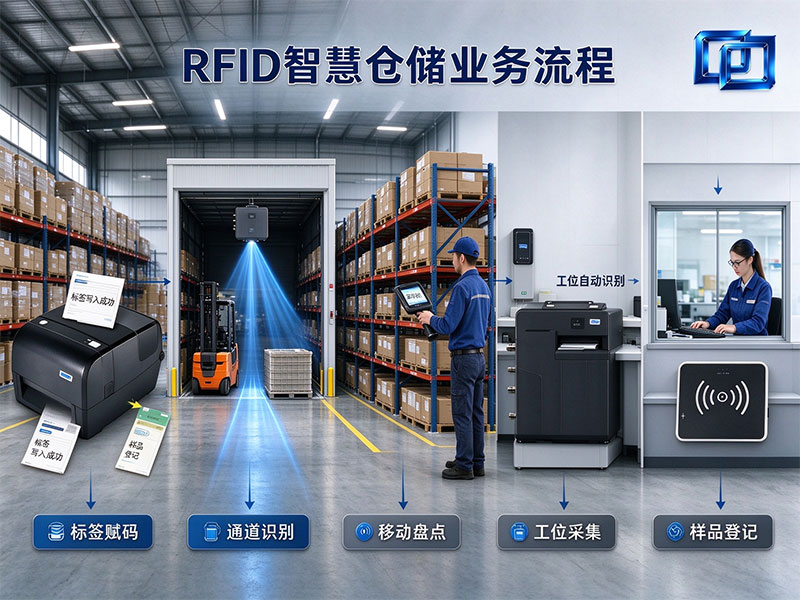
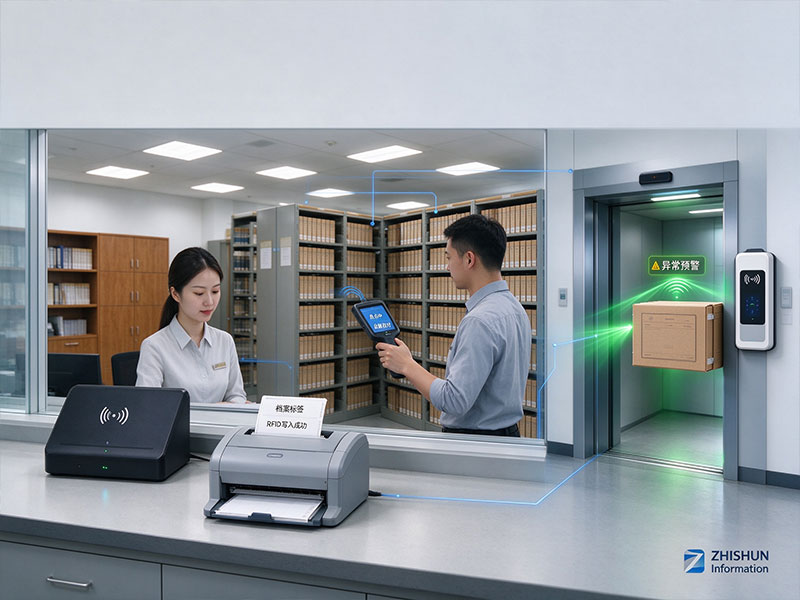
Image Suggestion: Selection comparison diagram | Card-style layout showing fixed readers, handheld readers, integrated readers, desktop readers and RFID printers separately, with core functions and applicable scenarios markedImage Caption: Schematic diagram of mainstream UHF RFID device classification, clearly distinguishing the positioning and applicable scenarios of fixed readers, handheld readers, integrated readers, desktop readers and RFID printers.
With the popularization of RFID technology in warehousing, manufacturing, retail, asset and archive sectors, many project teams confuse the positioning of different types of RFID readers during selection, resulting in mismatched equipment and scenarios and extra project costs. This article sorts out the applicable boundaries of four mainstream RFID reading devices and RFID printers for project reference.
RFID Fixed Reader: Automatic unattended collection device, suitable for continuous collection at fixed points. Typical scenarios: warehouse access channels, production assembly lines, factory gates, library access control. Advantages: supports multi-antenna expansion, 7×24-hour continuous operation and fast batch tag reading; Disadvantages: fixed installation, not for mobile operation, relatively high procurement cost, requiring pre-site RF environment commissioning.
RFID Handheld Reader: Core device for mobile inventory, operated manually by staff. Suitable for shelf inventory, asset inspection, on-site sampling inspection and outdoor equipment verification. Advantages: flexible and position-free; some models support dual-mode barcode + RFID scanning; Disadvantages: dependent on manual operation, not fit for unattended automatic collection. Battery life and enclosure protection rating are key selection indicators.
RFID Integrated Reader: Lightweight fixed collection device with integrated reading-writing module and antenna. Easy to install and requires simple wiring. Suitable for compact small channels, embedded self-service equipment, self-service borrowing terminals and small warehouse entrances. Compared with multi-antenna fixed readers, it features lower deployment cost and moderate performance.
RFID Desktop Reader: Dedicated short-range reading device. It focuses on limiting reading distance and suppressing cross-reading, widely used for counter encoding, initial tag setup, archive registration and jewelry verification. Not suitable for long-distance batch inventory. Its core performance metric is controllable reading area to avoid reading nearby tags.
RFID Printer: The source device for RFID projects. Different from ordinary barcode printers, it prints texts and barcodes while encoding data into RFID chips, finishing tag production in one step. It is required for retail hang tags, archive labels, asset identifiers and logistics turnover tags.
Summary of selection logic: Choose fixed readers for unattended channel automation; handheld readers for manual mobile inventory; integrated readers for small self-service points; desktop readers for counter short-range encoding and registration; RFID printers for bulk tag production. A reasonable combination of different devices helps build a low-cost and stable RFID system.

Scan To Add

Scan To Add
Copyright © 2026 Shenzhen Zhishun Information Technology Co., Ltd All Rights Reserved.
Technical Support:SYSX





 182-7997-4925

 Home