Hardware And Software Integration, Covering Multiple Application Scenarios
 2026-10-26
I. Case Overview
Item | Content |
Case Name | Grand Rapids Public Library UHF RFID System |
Location | Grand Rapids, Michigan, USA |
Institution Type | Municipal public library system with 8 branches in total |
Timeline | 2012 (RFID Journal reported in September of that year): Main library launched borrow/return functions first, then rolled out to all 8 branches; at time of report, only main library checkout completed, remaining branches still tagging |
Industry Position | Both the library and the supplier stated this was the first public library system in North America to adopt UHF RFID (report used the phrase "believes it is the first", representing the library's claim) |
Solution Supplier | eAgile (Michigan-based RFID company), product suite called BookSmart ID |
Tags | EPC Gen 2 Ultra-High Frequency (UHF) tags, eAgile purchased inlays, encoded and printed them uniformly, each tag printed with human-readable tag number and book title |
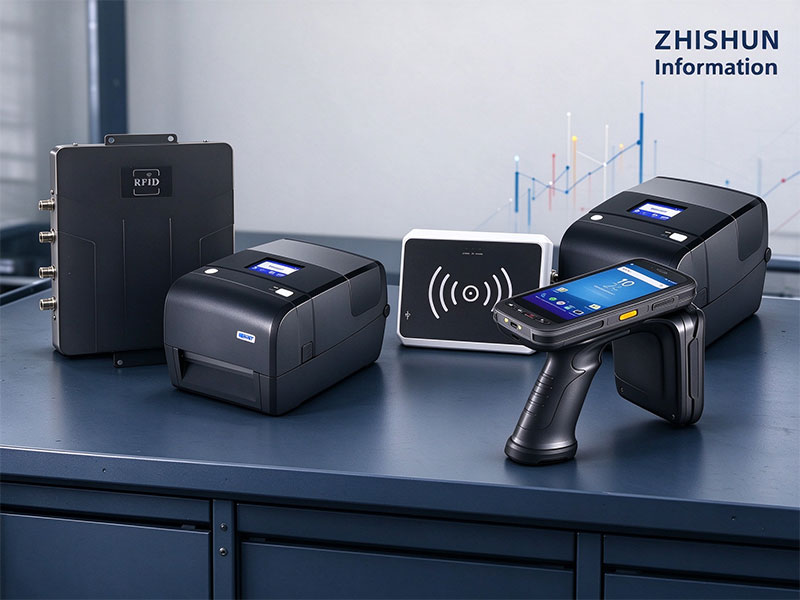
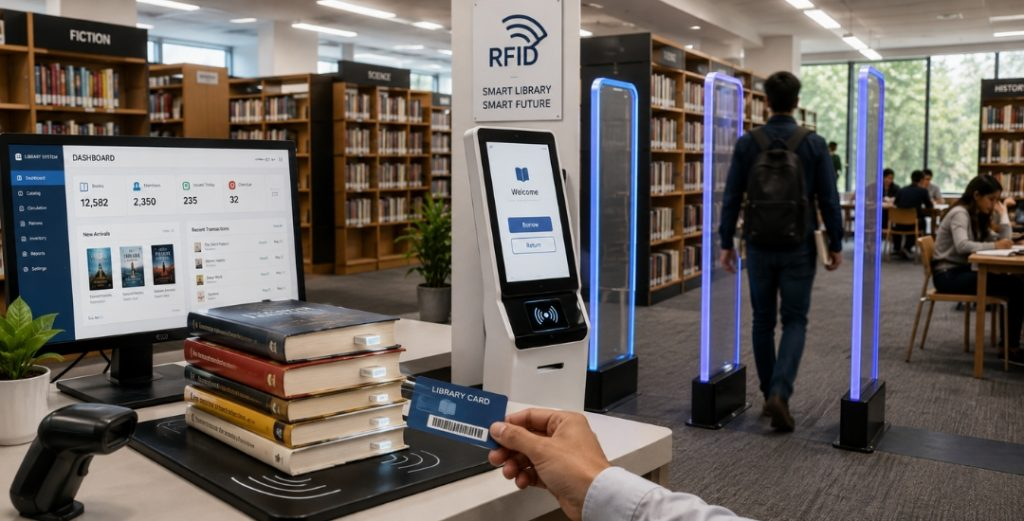
Core Hardware | Fixed readers (under checkout counter, inside return chute), handheld reader, wheeled cart with reader, entrance/exit security gates |
System Integration | Open-source Library Integrated System Evergreen + library IT department self-developed software + BookSmart API |
Selection Motivation | After years of evaluating HF solutions, concluded they were "too expensive or limited in capability", switched to UHF |
Key Results | ① Stack of books read at once to complete checkout; |
Data Note | Public reports did not disclose total collection size or any quantitative efficiency metrics; this document does not fabricate or extrapolate any numbers. For quantitative references, please cite industry reference in Section 6.3 of Chapter VI |
Core data source: RFID Journal "Grand Rapids Library Adopts UHF RFID Technology" (September 2012). See source list at end of document.
II. Project Background: Global Libraries All Use HF — Why Did This One Refuse?
2.1 Industry Consensus Was HF — and It Had a Cost
Around 2012, the vast majority of libraries worldwide that had already implemented RFID used High Frequency (HF, 13.56 MHz) passive tags. HF was the recognized standard solution in the library industry at that time. But HF had an unavoidable physical constraint: short reading distance.
• Short reading distance: Tags could usually only be read at close range on the checkout counter; business operations were limited to the action of "person placing book on counter".
• Anti-theft required a separate system: Because HF reading distance was insufficient to cover entrances/exits, libraries often needed to build a separate anti-theft system, or install large channel antenna arrays specifically for reading HF tags at entrances/exits.
In other words, under the traditional HF approach, checkout, anti-theft, and inventory were three separate systems — this was the root cause of all subsequent cost issues.
2.2 Negative Conclusion After Years of Evaluation
Marla Ehlers, Deputy Director of the Grand Rapids Public Library, explicitly stated in the report: after several years of research on HF solutions, the library concluded that HF was "either too expensive or limited in what they provided".
This statement is key — it didn't say HF was bad, but that HF didn't meet requirements on the "price-capability" combination. The library then found eAgile, which provided the system called BookSmart ID.
2.3 An Easy-to-Miss Credibility Detail: The Supplier Sells Both HF and UHF
Gary Burns, CEO and co-founder of eAgile, explicitly stated in the report that the company "sells both HF and UHF library solutions". This point deserves special emphasis: this wasn't a manufacturer that only makes UHF products one-sidedly pushing UHF, but a supplier with two product lines that recommended UHF under the customer's specific constraints.
Burns gave three very practical arguments for UHF:
1. Efficiency: Faster, more efficient — stacks of books can be read simultaneously.
2. Space: Doesn't need the large channel antenna arrays common in HF solutions, takes up less space.
3. Cost: Lower overall investment (three systems merged into one, see Chapter IV).
III. Technical Solution: Four-Layer Structure of BookSmart ID
3.1 Tag Layer: Batch Pre-Fabricated by Shelf, Not Book-by-Book Lookup
This is the most worthwhile engineering organization approach to learn from in the entire deployment:
1. Grand Rapids Public Library provided catalog data to eAgile shelf by shelf.
2. eAgile generated a set of tags for each bookshelf, with each tag printed with human-readable tag number + book title.
3. The unique ID encoded in the tag inlay was bound one-to-one with the collection record in the library's open-source ILS "Evergreen".
4. Library staff picked up pre-fabricated tags in shelf order and pasted them, no longer needing to verify book titles one by one.
The value of this process was turning "tagging" from a per-book operation into batch processing. It's completely consistent with the approach of the Jinan City Library project in China (gather by shelf, batch process) — teams from different countries and eras converged on the same approach.
3.2 Collection Layer: Division of Four Types of Reader Devices
Equipment | Deployment Location | Business Functions Handled |
Fixed Reader (Checkout Counter) | Under checkout counter surface | After patron swipes library card barcode, places stack of books on counter, reads all tags at once without per-book close-range scanning |
Fixed Reader (Return Chute) | Return slot / end of return box | Returned books dropped into chute auto-read tag ID, update status to "returned", and auto-check if reserved by others; if reserved, alert staff to set aside separately |
Security Gate Reader + Antenna | Entrance / Exit | Identifies and alarms for books not properly checked out; not only alarms but also reports specifically which books to staff |
Handheld Reader | Mobile use throughout library | Inventory and location; after enabling Geiger counter mode, staff walk along stacks to locate mis-shelved books by signal strength |
Portable Reader (Wheeled Cart) | Stack aisles | Batch-read entire shelf of books as cart moves, used for periodic inventory |
3.3 Data Layer: Open System + Self-Developed Software + API
• ILS: Open-source Library Integrated System Evergreen, tag unique ID bound to its collection record.
• Self-developed software: Library IT department developed software internally to manage RFID-read data and integrate with existing library management systems.
• Supplier API: eAgile provides BookSmart Application Programming Interface (API) to connect RFID data with library databases.
3.4 Application Layer: Six Automated Actions
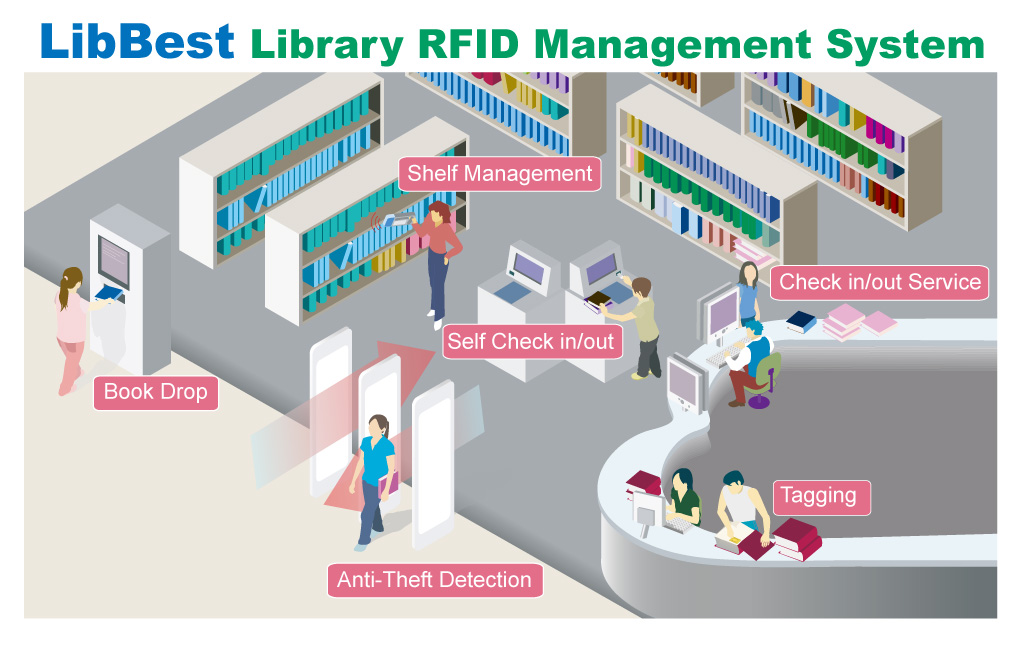
• Batch checkout: Stack of books read at once to complete checkout, replacing per-book scanning.
• Auto-return: Chute auto-registers and auto-completes reservation interception.
• Exit security: Single set of security gates replaces independent anti-theft system, with detailed reporting capability.
• Quick inventory: Handheld device or wheeled cart batch inventory, replacing manual per-book counting.
• Mis-shelved retrieval: Geiger mode locates along stacks, replacing manual searching for mis-shelved books.
• Kit verification: Multi-disc materials verified complete at once (see Chapter V for details).
IV. Why UHF: Direct Comparison with HF
This chapter is the most valuable part of the entire case. UHF won in libraries not because it "reads farther" — it won because it changed the number of systems.
Comparison Dimension | HF (13.56 MHz) | UHF (860–960 MHz) | Engineering Consequence for Libraries |
Reading Distance | Close-range, typically read on checkout counter surface | Far-field, eAgile UHF product line rated 1–20 meters | UHF can work off-counter, inventory and book finding no longer limited by "bringing book to device" |
Checkout / Return Method | Per-book close-range reading | Stack of books read at once | Structural reduction in peak-hour queuing time |
Anti-Theft System | Due to insufficient reading distance, usually requires building a separate anti-theft system, or installing large antenna arrays at entrances/exits for reading HF tags | Single set of security gates handles both identification and alarm | UHF needs one less system — this is the main reason for cost reduction |
Space Occupancy | Large entrance/exit antenna array | Less space | Especially important for renovation of older library buildings |
Overall Cost | Higher (multiple systems stacked) | Lower (systems merged into one) | Consistent cost judgment from both library and supplier |
Inventory Method | Close-range, per-book | Handheld / wheeled cart, long-range batch | Periodic inventory changed from "closure-required project" to routine operation |
Multi-Tag Simultaneous Reading | Limited capability | Strong, can capture dozens to hundreds at once | Supports multi-disc kit verification, whole-shelf batch inventory and other scenarios difficult for HF to implement |
Compressing this table into one sentence: UHF is not superior to HF in every dimension — its real value is merging the three systems of "checkout/return + anti-theft + inventory" into one. This is the source of cost reduction at Grand Rapids Public Library, and the key sentence to use when proposing to overseas customers — customers aren't buying reading distance, they're buying two fewer systems to build.
V. An Underestimated Detail: "Full Inspection Without Opening Boxes" for Multi-Disc Audio/Video Materials
There's a technical detail in the report that almost all republished versions ignore, but it's precisely proof of UHF's differentiated capability in library scenarios.
Library audio/video materials (multi-disc CD / DVD) have long had a management pain point: during checkout and return, staff must open the box and count each disc to verify completeness. Here's how Grand Rapids solved it:
1. A UHF tag is pasted on the outer cover.
2. Each disc inside the box has its own UHF tag.
3. At the software layer, a parent-child association is established between the outer cover tag ID and each disc tag ID.
4. The reader captures all tag IDs at once — no need to open the box.
5. During checkout or return, the system automatically verifies disc completeness, missing discs detected immediately.
The inspiration for suppliers here is: when proving UHF's value to customers, don't just talk about parameters — give concrete business scenarios that "HF can't do but UHF can". Multi-disc kit verification, whole-shelf batch inventory, long-range mis-shelved location are all examples of this kind.
VI. Implementation Results and Data Note
6.1 Facts Directly Citable from This Project (All Qualitative Descriptions)
Business Process | Before Renovation (Barcode / HF Conventional Approach) | After Renovation (UHF Solution) |
Checkout Processing | Scan barcode per book | Stack of books placed on counter, all tags read at once |
Return Processing | Manual per-book processing | Drop into return chute for auto-registration, auto-check if reserved by others |
Reservation Handling | Staff manually check reservation list | System auto-prompts, staff directly set book aside, no longer shelve it |
Entrance/Exit Anti-Theft | Need to build separate anti-theft system, or install large HF channel antenna array | Single set of security gates handles anti-theft, and can report specific info about un-checked-out books to staff |
Periodic Inventory | Manual per-book counting | Handheld reader or wheeled cart batch-reads entire shelf of books |
Mis-Shelved Book Location | Manual searching along stacks | Handheld device Geiger counter mode, locate by signal strength |
Multi-Disc Material Verification | Need to open box and count each disc | No need to open box, capture all tag IDs at once for auto-verification |
Tag Processing | Verify book title per book, then paste tag | Batch pre-fabricate tags with book title by shelf, paste in order |
6.2 Important Statement: This Case Does Not Disclose Any Quantitative Metrics
Must clearly inform: As of this search, neither the original RFID Journal report nor any subsequent republished versions disclosed quantitative data such as Grand Rapids Public Library's total collection size, inventory time, labor savings percentage, investment payback period, etc. The reports only have qualitative descriptions, no percentages or time numbers at all.
Therefore this document does not fabricate or extrapolate any numbers. If you need quantitative references for external proposals, please cite the industry reference data in the next section, and strictly note its source and statistical caliber.
6.3 Industry Quantitative Reference (Not This Case's Data)
Indicator | Reference Data | Source and Caliber |
Annual Inventory for 100,000-Volume Collection | Approximately 3 weeks → approximately 3 hours, efficiency improved by over 90% | Chainway public case: a domestic Chinese library, UHF handheld + desktop reader |
Full-Library Inventory at 100,000-Volume Scale | 1 month → 4 hours | RFID World industry caliber, no specific library name noted |
Inventory Labor Efficiency | 3 people/week → 1 person/hour | RFID World industry caliber, no specific library name noted |
Self-Checkout Batch Recognition | ≤10 books recognized at once, completed within 2 seconds | RFID World industry caliber |
600,000+ Volume Collection Inventory | Completed in 15 minutes, accuracy 98.4%, cost only 3% of intelligent shelf solution | Jinan City Library, Dazhong Daily October 19, 2026 public interview with the library (domestic case, verifiable) |
Average Patron Borrowing Time | 3 minutes → 20 seconds | National Library of China, industry media relayed, no original report seen, suggest cautious citation |
Mis-Shelving Rate | 8% → 0.5% (circulation rate increased by 35%) | National University of Singapore Library, industry media relayed, no original report seen, suggest cautious citation |
UHF Share in Library RFID Installations | Approximately 58% | Market research firm (Intel Market Research) 2025 estimate, non-authoritative statistics, for trend judgment only |
Global Library RFID Solution Market Size | Approximately $2.3 billion USD in 2025 → approximately $3.9 billion USD in 2034 | Market research firm forecast, unofficial statistics, for trend judgment only |
VII. Other Overseas UHF Library Cases and Clues
Publicly available information on overseas library projects explicitly labeled as UHF is scarce. The following four are verifiable clues found, with strength of caliber noted after each — please do not mix them together.
7.1 Singapore National Library: Symbolic Signal of Shift from HF to UHF
• Background: Singapore National Library was one of the first libraries in Asia to promote HF RFID technology.
• Action: Starting in 2017, began testing UHF RFID products and solutions; Chinese manufacturer Invengo won the bid to provide UHF RFID products among them.
• Intent: According to reports, Singapore NLB had plans or intentions to gradually replace HF products with UHF products.
• Caliber Note: This item comes from a 2018 Chinese industry media report on Invengo, represents the supplier's side information. No official confirmation from Singapore NLB found. Please note caliber when citing externally.
7.2 Chinese Manufacturers Going Global: Invengo's Overseas Library Layout
• United Kingdom: Completed smart library project cooperation with University of Nottingham UK through wholly-owned subsidiary FET.
• China-UK Joint Campus: University of Nottingham Ningbo China Library: 5 floors, 25,000 ㎡, approximately 200,000 open-shelf books, over 2,600 study seats; configured with self-checkout/return machines, 24-hour self-return machines, automatic book sorting line, security gates; "equipment compatible with identifying legacy high-frequency (HF) tags", and reading not interfered by magnetic strips.
• United States: 2019 Board of Directors Work Report: International business revenue accounted for approximately 32.36% of main business revenue; expanded international library business mainly in the US, achieved strategic layout projects in 3-4 US states.
• Recent Progress: 2024 Annual Report: Australian subsidiary FET completed core product line upgrade, V6 self-checkout/return machine launched; European market exploring "RFID + AI" applications; broke through major US library customers; but affected by local policy factors, some public procurement projects delayed.
• Caliber Note: Annual report data is publicly disclosed by listed companies, high credibility; project and product details from supplier website case pages, supplier caliber.
7.3 Germany: Autonomous Robot + UHF RFID Inventory
• Demo Content: Ernst Abbe University of Applied Sciences Jena (EAH Jena) demonstrated at Science Night event: mobile robot equipped with UHF RFID reading technology, autonomously inventories pre-tagged books and clothing.
• Public Data: Public statement: automated inventory speed over 10 times faster than manual; can estimate tag position, positioning accuracy to tens of centimeters, used to find books "believed to be lost".
• Caliber Note: This is a science popularization / research demonstration, not a commercial deployment. Cannot be cited as data source for mature commercial solutions.
VIII. Inspirations for Chinese RFID Manufacturers Going Global
This chapter is the core content of this document for suppliers; all six points are distilled from the above real cases and annual report disclosures.
1. Don't argue frequency bands with customers — calculate total system count: The real reason Grand Rapids chose UHF wasn't "reads farther", but three systems merged into one. Overseas libraries have tight budgets and old buildings; merging "checkout/return + anti-theft + inventory" into one is an algorithm that moves decision-makers more than any performance parameter.
2. Legacy HF tag compatibility is a hard requirement: Many overseas libraries already have first-generation HF tags in place. One of Invengo's key selling points in the Nottingham Ningbo project was equipment compatibility with legacy HF tags. Make UHF + HF dual-band compatibility a standard feature of your equipment — otherwise you get rejected immediately.
3. "First" narrative has premium, but must be verifiable: Grand Rapids positioned itself as "the first public library in North America to use UHF", this label gave it industry media exposure far exceeding the project's scale. But note the report wording was "believes it is the first" — leaving room. You can help customers find positioning, but don't make up "first" claims for them.
4. Tags are a long-term business, not a one-time sale: eAgile's model is worth copying: receive catalog data by shelf → batch encode and print tags with book titles → deliver for pasting. New books continuously enter the library, so tag and processing services become recurring revenue, not one-time hardware sales.
5. Interface capability determines whether you can enter: Overseas library ILS is highly fragmented (Evergreen, Koha, Alma, Symphony, etc.). SIP2 / NCIP protocol support, degree of API openness, field mapping capability — these often determine whether you can enter before reader parameters do.
6. Policy and procurement cycle risks: Invengo's 2024 annual report explicitly mentioned "affected by local policy factors, some public procurement projects delayed". When doing overseas public library business, you must write this risk into project plans and cash flow forecasts, reserving sufficient cycle time.
IX. Hardware Configuration List (General Suggestions, Replaceable with Your Company Models)
Official reports of the Grand Rapids project did not disclose equipment models and procurement lists. The table below is general configuration suggestions for similar UHF library projects, can serve as framework for selection and quotation:
Category | Specification Suggestion | Deployment Location / Usage | Your Company Corresponding Product |
UHF Book Tag | EPC Gen2 / ISO 18000-6C, 860–960 MHz; paper or synthetic face material; supports color printing, serial number, barcode; customizable size | One per book; supports batch pre-fabrication and encoding by shelf | UHF Book-Specific Tag |
UHF Shelf Tag | Metal-resistant packaging, handles metal shelves and compact shelving environments | One per shelf level, records level coordinate | Metal-Resistant Tag Series |
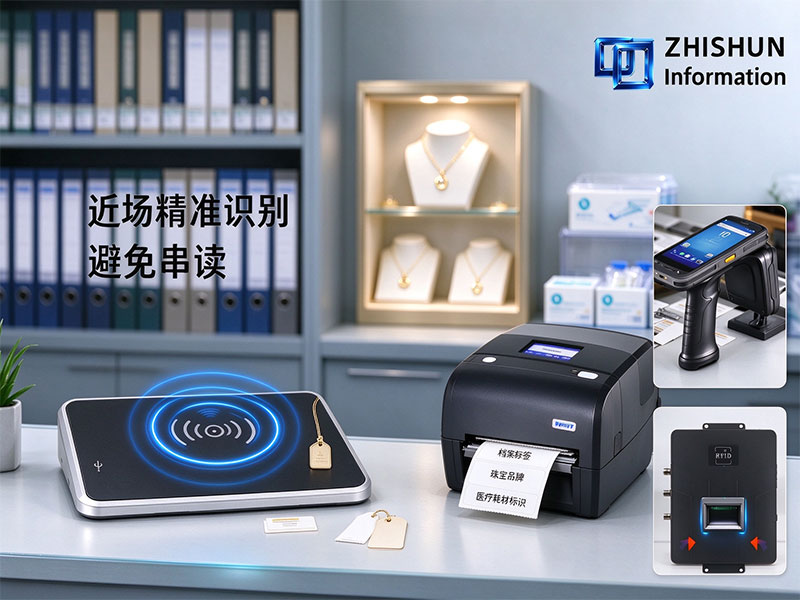
Under-Counter Fixed Reader | Near-field / short-range controllable reading, avoid misreading adjacent books; supports multi-tag anti-collision | Under checkout counter surface, read stack of books at once | Four-Channel Fixed UHF Reader |
Return Chute Reader | Supports auto status update and reservation interception logic | Return slot / end of return box | Four-Channel Fixed UHF Reader |
Security Gate Reader + Antenna | Channel-style deployment, supports un-checked-out book identification and title-level reporting | Entrance / Exit | UHF Channel Gate (Reader + Antenna) |
UHF Handheld Reader | Supports RSSI strength positioning (Geiger counter mode) | Whole-library mobile inventory, mis-shelved location | UHF Handheld Reader |
Wheeled Inventory Cart | Portable reader + height-adjustable antenna, battery supports full shift operation | Stack aisles, whole-shelf batch inventory | Mobile Inventory Cart |
Tag Printer / Encoding Station | Supports serialization, barcode, color printing, 100% write verification | Acquisition and processing stage | UHF Tag Printer / Encoding Station |
Middleware and API | Supports SIP2 / NCIP, adapts Evergreen, Koha, Alma, Symphony, etc.; supports unified access of HF and UHF dual-band devices | Local server or private cloud | Library RFID Management Platform |
X. Pitfall Avoidance Guide: Ten Control Points for Overseas Library UHF Projects
1. Ask first if there are legacy HF tags: Many overseas libraries already have first-generation HF tags; no compatibility capability means immediate elimination. This is the first point, and the one most likely to fail.
2. Checkout counter misreading: UHF far-field can read adjacent books at checkout counter. Counter surface must use near-field / short-range antennas, combined with physical shielding and power control, and verify under real stacked book scenarios.
3. Security gate occlusion and false alarms: Tags will be blocked by arms and body when patrons carry books through. Security gates must use multi-antenna multi-angle deployment, and verify with real people — don't only test with empty channels.
4. Catalog data verification: The prerequisite for batch pre-fabrication of tags by shelf is obtaining complete and accurate catalog data; field verification must be completed before printing, otherwise the cost of reworking hundreds of thousands of tags is unacceptable.
5. Multi-component material association: Outer box and inner components are tagged separately with parent-child association at software layer. This is UHF's differentiated selling point over HF — make it a standard feature, not custom development.
6. ILS protocol verification first: SIP2 / NCIP version, field mapping, offline degradation plan — all must be tested and connected before bidding. Don't wait until after entering to discover protocol incompatibility.
7. Privacy compliance: Europe and US are extremely sensitive about borrowing records linked to personal identities; EU GDPR, various US state privacy laws have different requirements. Need explicit notice, minimize collection, borrow history desensitization, localized storage.
8. Tag tampering prevention: Libraries worry about patrons tearing off tags; tags need both concealment and tamper resistance, and plan a re-tagging process.
9. Accuracy expectation management: Don't promise 100% read rate. Give verifiable measured calibers (like 98%+) and supporting remediation processes — customers trust you more this way.
10. Procurement cycle risk: Public procurement projects are greatly affected by policies, budget years, and local procurement requirements. Reserve 6–12 month cycle, and include extension clauses in contracts.
XI. Data Sources and Citation Notes
1. RFID Journal "Grand Rapids Library Adopts UHF RFID Technology", September 2012. (Core source for this case: 8 branches, eAgile / BookSmart ID, Evergreen, Marla Ehlers and Gary Burns statements, HF vs UHF comparison, multi-disc tagging solution, security gate detailed reporting, etc.)
2. RFID Label "The Michigan Library Implements Advanced UHF RFID System" (Complete republished version of the RFID Journal article, supplemented with Geiger counter mode, return box reservation interception process and other details)
3. RFID World "Grand Rapids Library Adopts UHF RFID Technology", September 2012 (Chinese translated version)
4. eAgile website "Which RFID frequency fits your needs?" (UHF 1–20 meter reading distance is eAgile product line rated value, not measured in this case)
5. RFID World "Invengo Deeply Cultivates Book Industry, China's Core Without Borders", July 2018 (Singapore National Library UHF test and Invengo winning bid info, supplier caliber)
6. Invengo website case "The First Digital Reading Space on the China-UK Education Cooperation Bridge" (University of Nottingham UK cooperation, University of Nottingham Ningbo China Library 25,000 ㎡ / approximately 200,000 volumes / 2,600 seats / equipment compatible with legacy HF tags)
7. Shenzhen Invengo Information Technology Co., Ltd. "2019 Board of Directors Work Report" (Sina Finance) (International business share 32.36%, layout in 3-4 US states)
8. Shenzhen Invengo Information Technology Co., Ltd. "2024 Annual Report" (FET product line upgrade, V6 self-checkout/return machine, broke through major US library customers, policy factors causing project delays)
9. Lange Nacht der Wissenschaften Jena event page (EAH Jena autonomous robot UHF RFID book inventory demo, science popularization demonstration nature)
10. Intel Market Research "RFID Books Management Solution Market" (UHF installation share approximately 58%, market size forecast, market organization estimate, non-authoritative statistics)
11. Dazhong News · Dazhong Daily "6-Second Face-Swiped Borrowing/Returning! Jinan Creates Nation's First Unattended Borrowing Closed-Loop Service", October 19, 2026 (Section 6.3 domestic comparison data)
Citation Note: Main case of this document (Chapters I-V) is qualitative facts, directly citable externally, but "quantitative numbers must not be fabricated"; Section 6.3 industry reference data belongs to different projects and different calibers, must be listed separately from the main case; Singapore National Library and Nottingham project in Chapter VII are supplier calibers, EAH Jena is demonstration nature — none of the three can serve as quantitative proof for commercial deployments.

Scan To Add

Scan To Add
Copyright © 2026 Shenzhen Zhishun Information Technology Co., Ltd All Rights Reserved.
Technical Support:SYSX





 182-7997-4925

 Home