Rfid Technology Empowers Various Industries
 2026-11-13
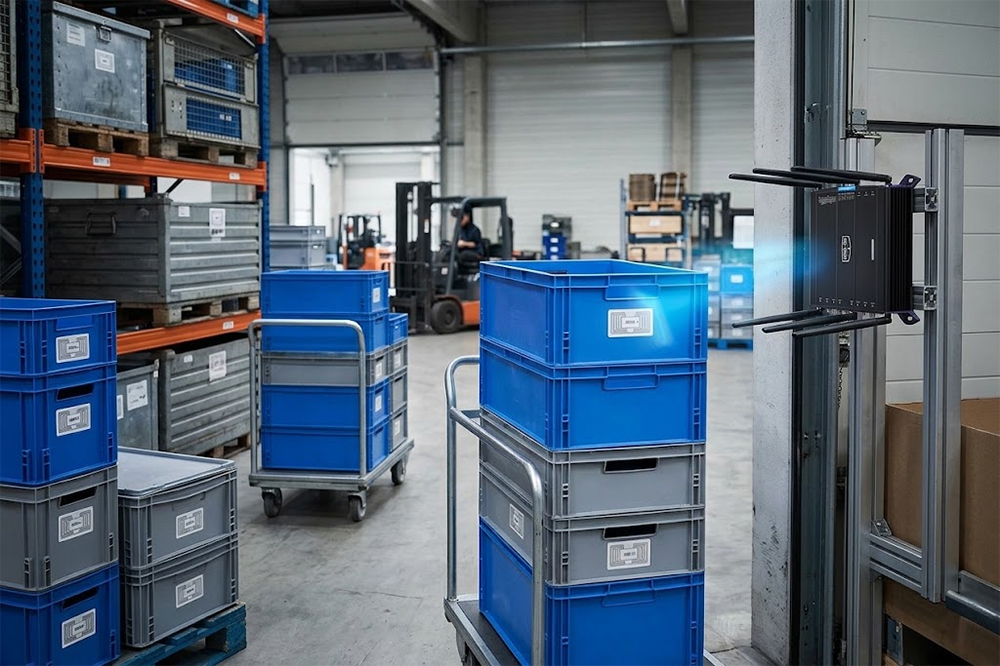
For delivery vehicles and dock doors: load counting · return counting · missing-ID identification
一、All Three Tracking Requirements Are Achievable with UHF RFID:
Same DNA as RTI asset tracking: battery-free tags, batch reads with no line of sight, built for high stacking and wash-down.
1.1:Load counting: crates loaded onto each vehicle
Dock-door antennas batch-read all crates once loading is complete — no per-crate scanning. Reads link automatically to the delivery order to form the load manifest.
1.2:Return counting: crates returned to the warehouse
Return-channel antennas read empty crates coming back; the system totals returns by customer and route, matched against each dispatch record.
1.3:Missing-ID: unreturned crates, listed automatically
Each crate carries a unique EPC; the system subtracts returns from loads and outputs the full missing-ID list with the responsible customer.
二、Four Field Pain Points Demand Industrial-Grade Tags and Antennas:
2.1:High stacking defeats barcode scanning
Crates travel in stacks of 6-10 layers on every vehicle; barcodes are hidden by the layers above and must be scanned one by one after unstacking — slow and error-prone at both dispatch and return.
2.2:Damp and wash-down environment
Crates are pressure-washed and chemically sanitized; paper barcode labels degrade within 5-10 wash cycles and glare under moisture.
2.3:The crate "black hole"
Empty crates linger at customer sites or drift into other pools — ownership cannot be proven and replacement costs accumulate.
2.4:Slow, error-prone manual counting
Loading and returns rely on manual counting, causing truck queues at peak times; book stock never reconciles, so return rates cannot be enforced per customer.
One answer fits all four: line-of-sight-free, bulk-capable, wash-resistant identification — passive UHF RFID.
三、Proven at Scale: RFID Tracking of Returnable Food Crates
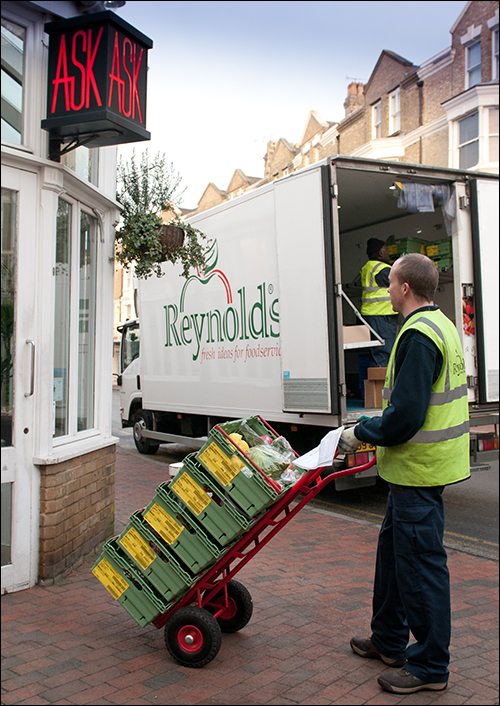
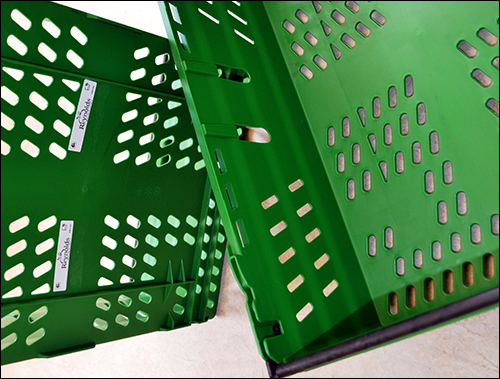
Reynolds, a leading UK distributor of food and catering supplies, utilizes passive UHF RFID technology to manage its entire inventory of reusable crates. Each crate is scanned upon dispatch and again upon return; the ERP system tracks return rates by customer, automatically triggering billing or accountability procedures if crates are not returned by the due date. This system has achieved a 98% on-time return rate for the crates.
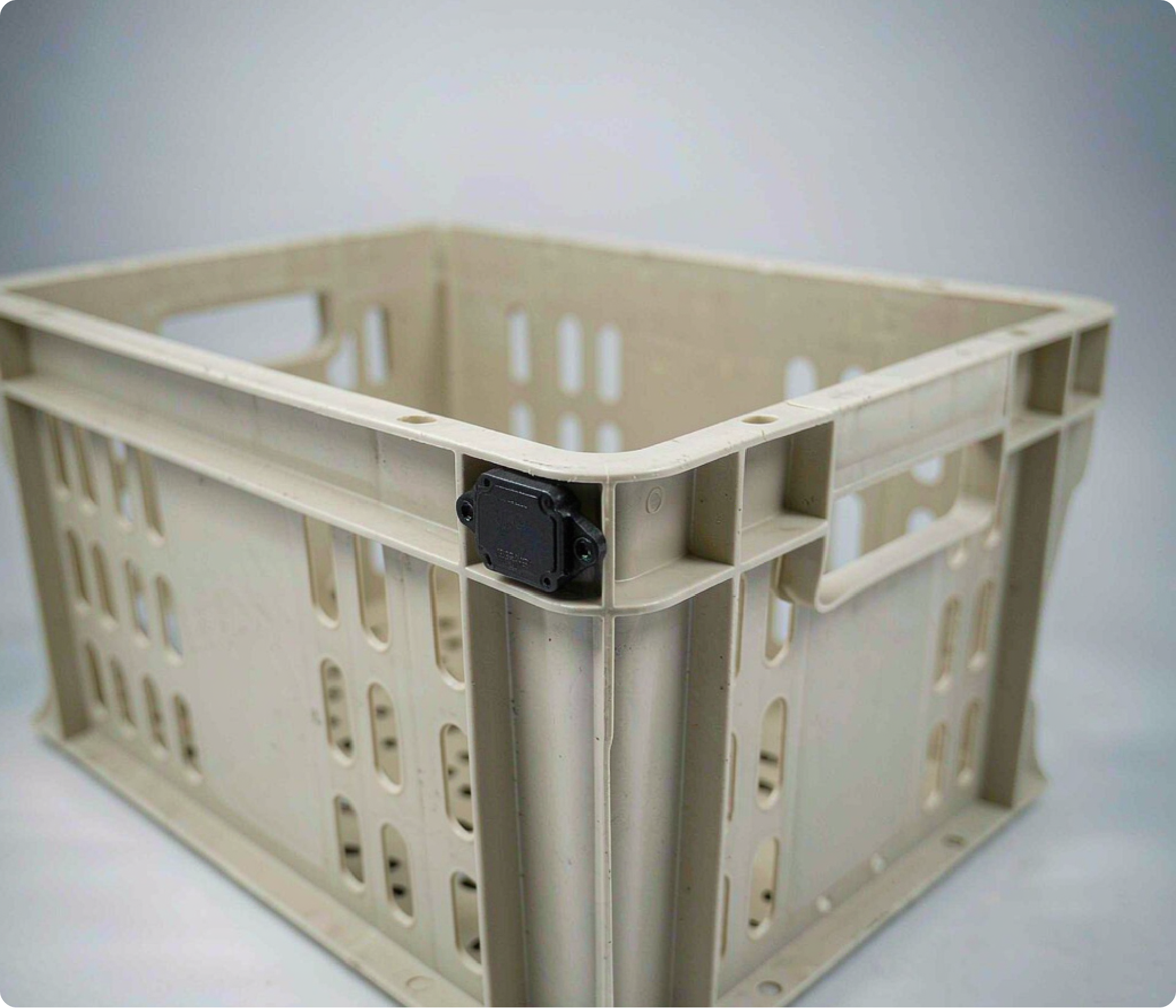
3.1:All 60,000 reusable crates are uniquely identified using UHF RFID. By employing a redundant, dual-tag configuration—placed diagonally—the system ensures reliable reading even after undergoing industrial-grade cleaning and intensive handling. The recovery rate for these crates has reached 98%!
3.2:The annual savings from reducing the need for additional picking rounds—based on actual measurements taken one year after the project’s launch—are estimated at £100,000–£150,000; once all clients have transitioned to the new system, these savings are projected to exceed £350,000 per year.
The same technology also tracks 45,000 t/year of strawberry crates at a Belgian cooperative. Bakery crates are smaller and washed more often — right at the upper end of these tag specifications, so maturity is not a risk.
四、Four-Layer Architecture: from Crate Tag to Business System
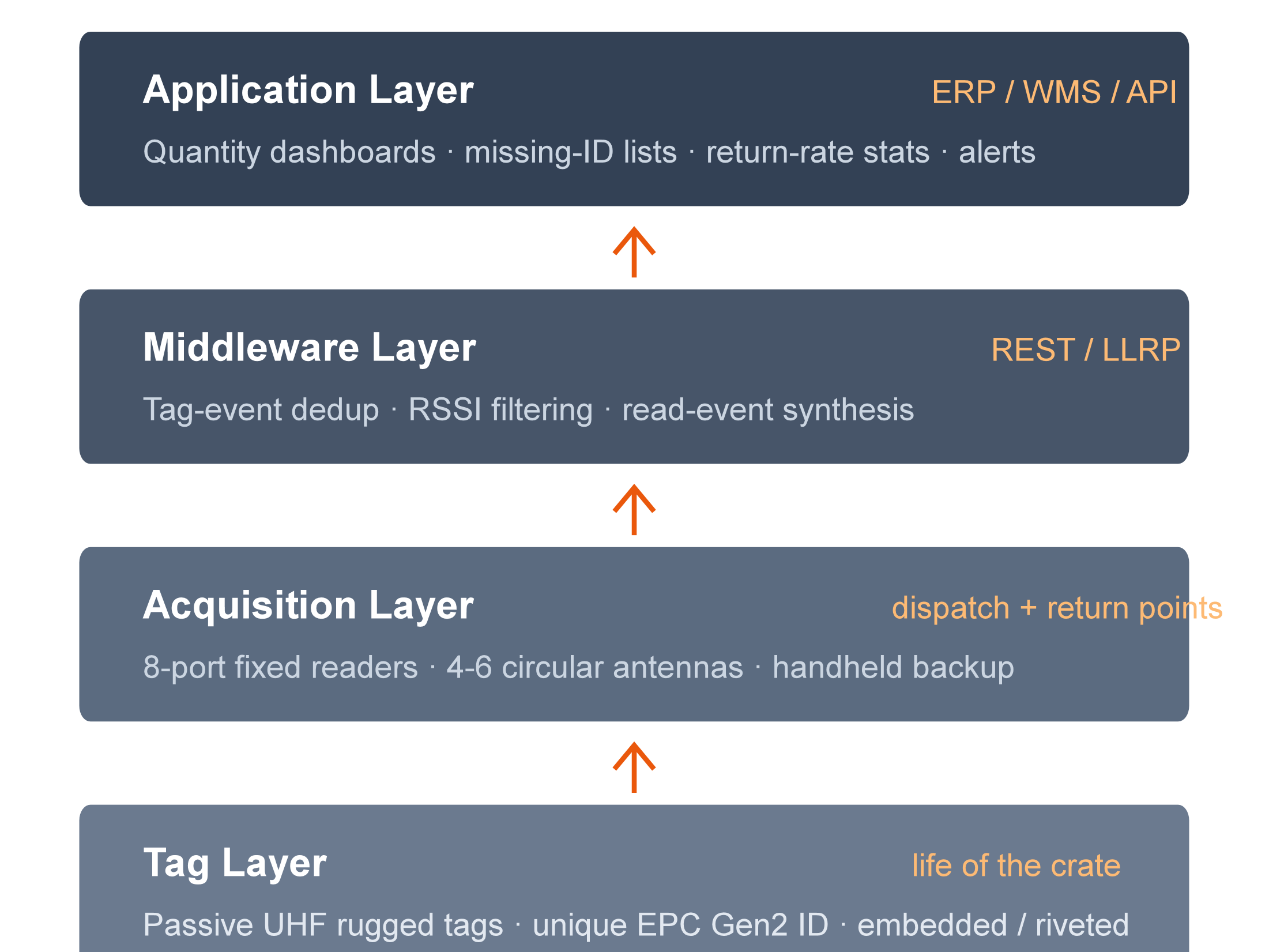
4.1:One read, full trace
Crates are read only at the dispatch and return gates; every read lands in a crate-level ledger with zero intervention elsewhere.
4.2:Dual-redundant capture
Fixed channels handle bulk reads; handhelds back up exception crates. Diagonal dual tags prevent single-point misses from soiling or damage.
4.3:Open standards, no lock-in
Air interface per EPC Gen2 / ISO 18000-63, encoding per GS1; data flows out through a REST API into your existing ERP / WMS.
五:Selection Guide for UHF RFID Readers and Tags
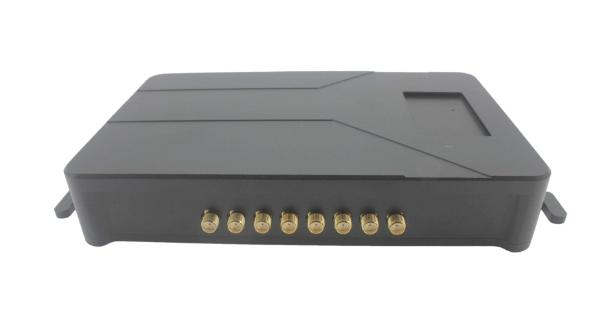
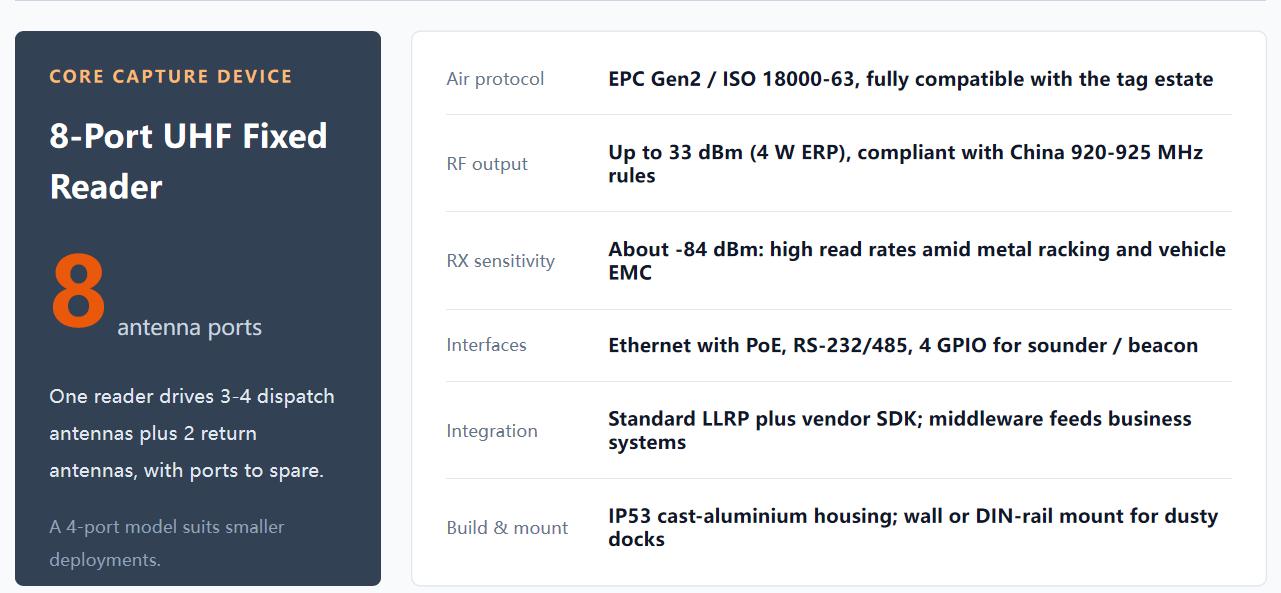
5.1:UHF RFID Reader Selection: One 8-Port Fixed Reader Covers All Points
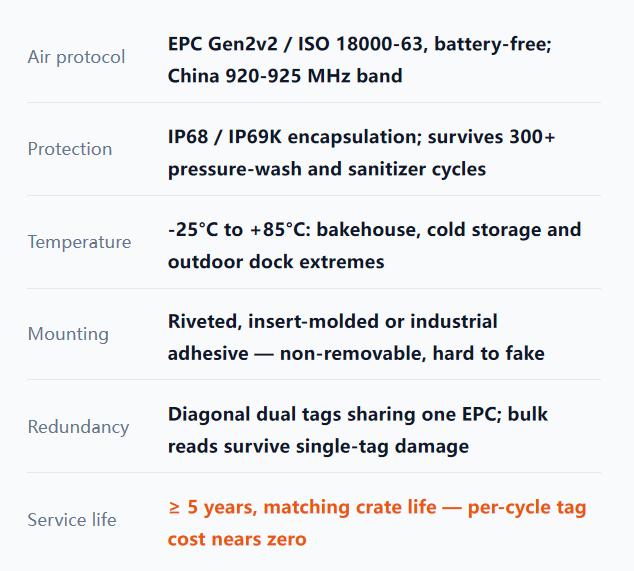
5.2:UHF RFID Tag Selection: Wash-Safe, Tamper-Proof Passive UHF Rugged Tags
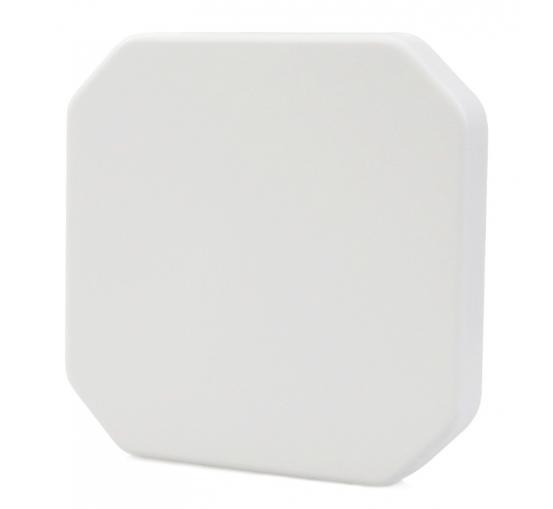
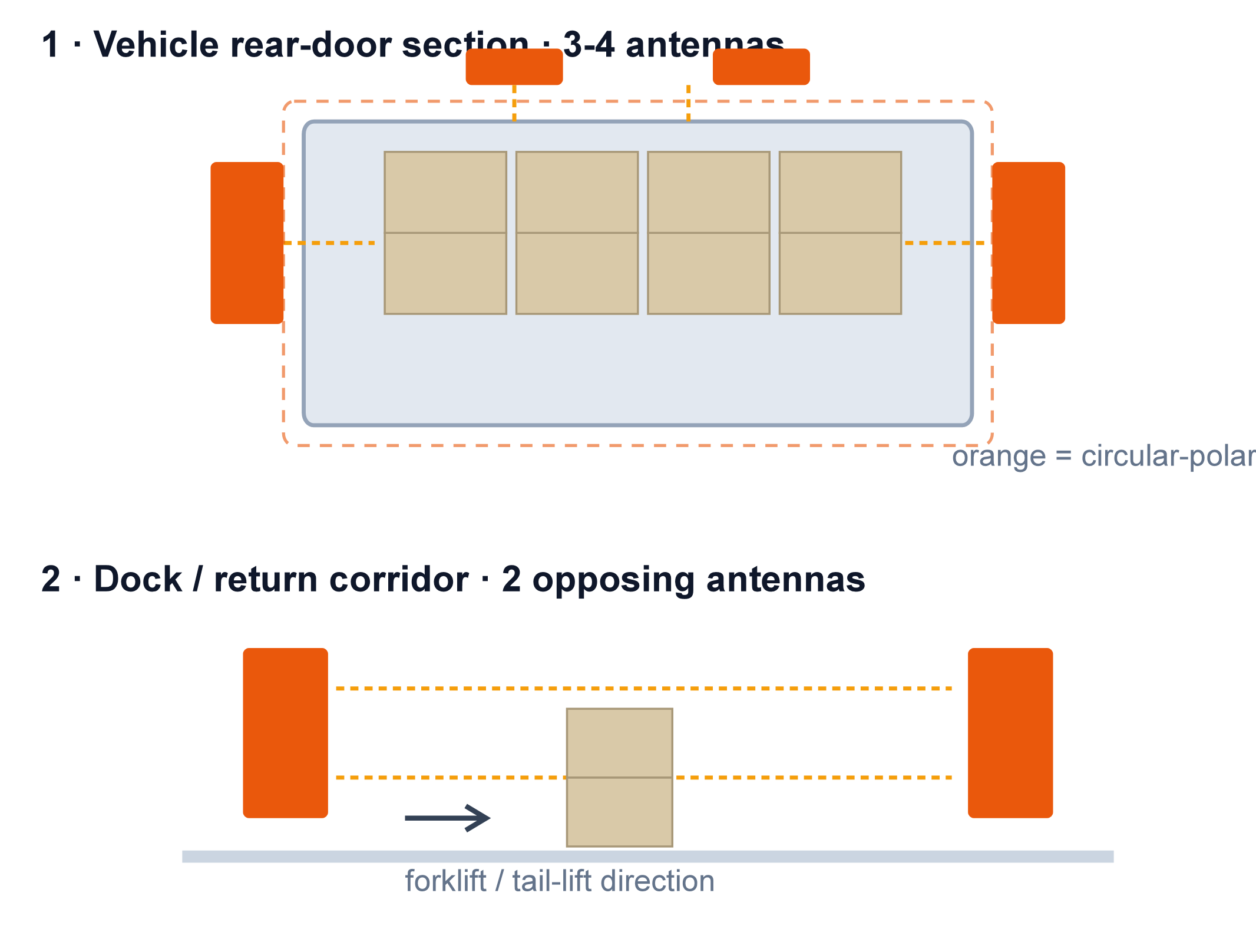
5.3、UHF RFID Antenna Layout: 4-6 Circular Antennas Cover Dispatch and Return
1:Stacked crates present tags at random 3D angles; circular polarization reads any orientation reliably, with none of linear polarization's blind zones.
2:8dBi circular-polarized panels, 6-10 m read range in warehouse conditions, IP65, -25°C to +70°C — suited to open-air docks.
3:Power and angles tuned per point: read everything at this door without cross-reading neighboring bays; door contacts or photocells trigger reads.
六、Software Application Implementation
6.1:Data Flow: Load and Return Logged; the Diff Gives Missing IDs
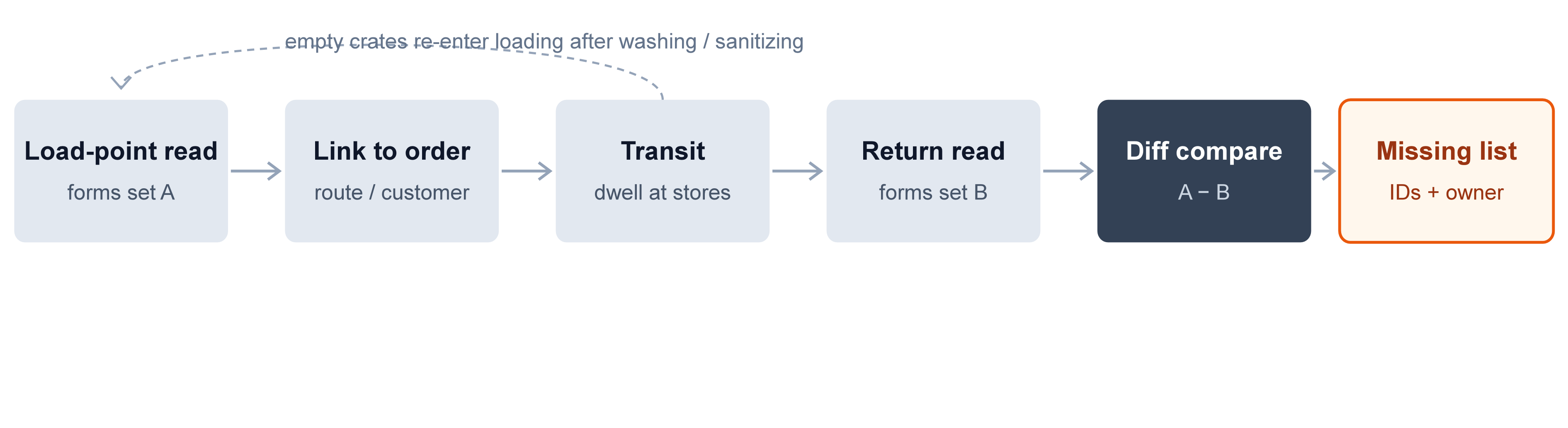
Load manifest:Full set-A crate IDs and counts per dispatch, auto-linked to the delivery order.
Return manifest:Full set-B crate IDs and counts, auto-totaled by route and customer.
Missing-ID list:The A − B diff gives each unreturned crate's ID, owner and days overdue — grounds for billing.
6.2:Software: Dashboards Plus API, Plugged into Your ERP / WMS
Real-time load / return comparison dashboard:Auto manifests for every dispatch and return; gaps visible the same day;
Missing-ID lists & overdue alerts:Diff results listed per crate; overdue returns pushed to owners automatically;
Return-rate stats by customer / route:Return rate becomes an enforceable KPI with automated weekly and monthly reports;
Overdue billing with an audit trail:Agreed return windows; overdue crates billed per unit, fully documented;
API integration:REST APIs expose read events, the crate ledger and diff results; webhooks push into ERP / WMS / store systems — field mapping done within two weeks.;
Data standards:EPC encoding follows GS1 EPCglobal; data can be exported and migrated to your own systems at any time — no vendor lock-in;

Scan To Add

Scan To Add
Copyright © 2026 Shenzhen Zhishun Information Technology Co., Ltd All Rights Reserved.
Technical Support:SYSX





 182-7997-4925

 Home