Rfid Technology Empowers Various Industries
 2026-11-12
Item-level identification for hospitals — mobile medical equipment, surgical instrument sets, medication and specimens (UHF RFID, 2026 edition)
Hospitals own thousands of mobile, high-value assets — infusion pumps, patient monitors, wheelchairs, endoscopes, surgical instrument sets, medication trays and specimen containers. All of them move constantly between wards, ORs, CSSD and pharmacy, and none of them are visible to any system: spreadsheets and barcode labels were designed for rooms, not for items in motion. This solution deploys UHF RFID (860–960 MHz, EPC Gen2 / ISO 18000-63; 920–925 MHz in China) across the hospital, delivering four measurable outcomes:
• Equipment search time down ~90%: nurses find any pump or wheelchair in minutes;
• 100% surgical instrument traceability — every set through every sterilization cycle;
• Utilization of mobile equipment up ~30% — rent less, buy less, waste less;
• Payback period of 12–18 months for a 500-bed hospital deployment.
Beyond asset control, the same infrastructure strengthens patient safety: no instrument left inside an OR count discrepancy, no expired medication issued, no specimen container unaccounted for.
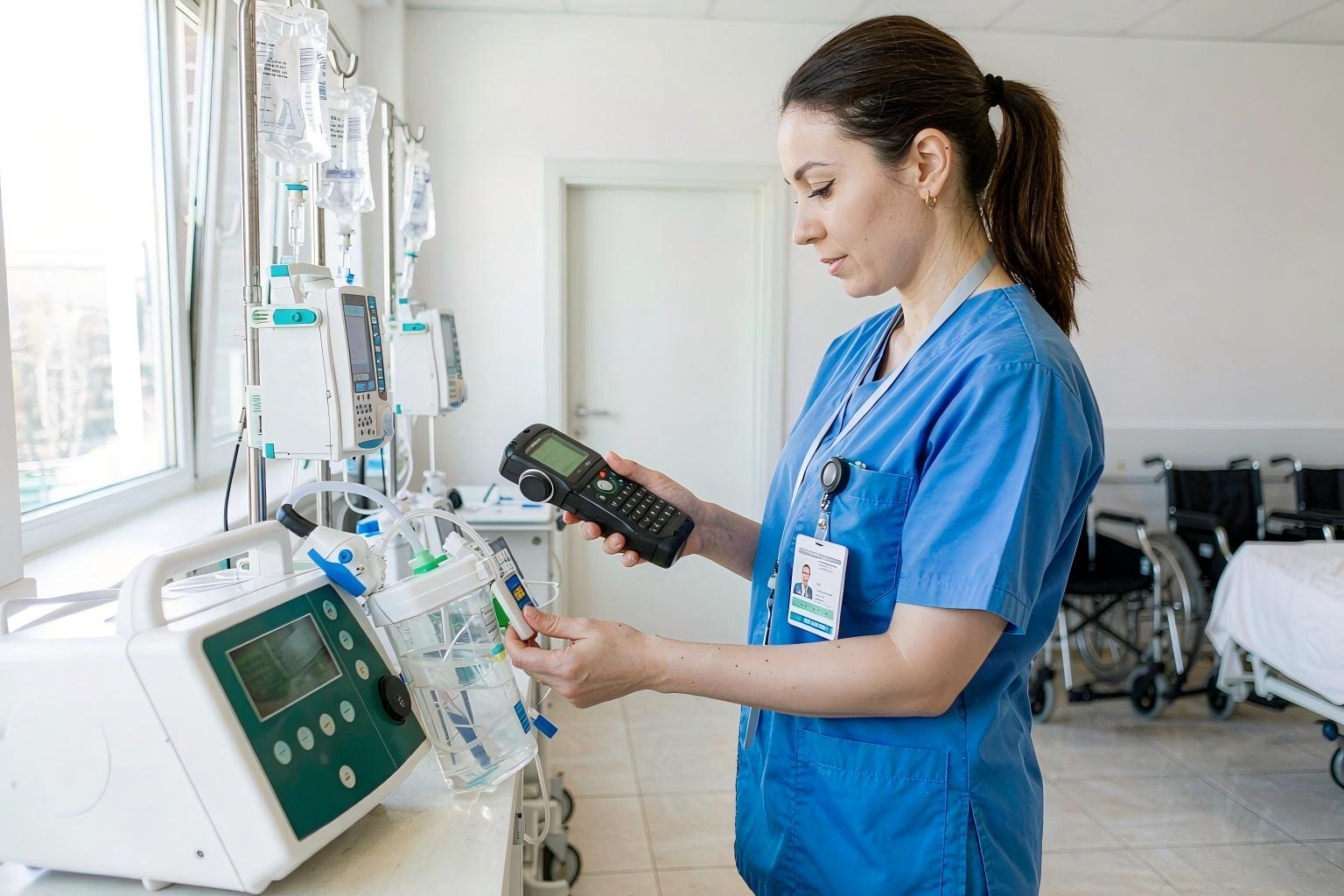
Fig. 1 — Ward rounds with a handheld RFID reader: one sweep identifies every tagged pump, monitor and wheelchair in the room, no line of sight required.
Movable medical equipment wanders between departments and never returns. Industry benchmarks show hospitals lose or cannot locate 10–20% of mobile assets annually — and, to stay safe, respond by renting duplicates that sit idle in corridors. Rental spend keeps rising while owned utilization falls below 40%.
Time-and-motion studies consistently find clinical staff spending 20–30 minutes per shift hunting for equipment. That is unpaid, unplanned labor subtracted directly from patient care, and the root cause of “borrowing without returning”.
Before and after every operation, staff count instrument sets by hand against a photographic chart — 15–20 minutes per tray, prone to error, with no recorded history of which set went through which sterilization cycle. A miscount discovered mid-operation delays surgery; an unrecorded lapse creates patient-safety and legal exposure.
High-value medications, blood products and specimens move through refrigerators, transport boxes and departments with handwritten or barcode checkpoints that are skipped under workload pressure — the chain of custody breaks exactly when volume peaks.
Without real utilization data, capital purchases are negotiated by anecdote: departments over-request, biomed buys duplicates, and the hospital discovers the truth only in the annual physical count.
Preventive maintenance, calibration and recall campaigns all require finding the device first. When equipment cannot be located, PM schedules slip silently — and an overdue defibrillator is a compliance incident waiting to happen.
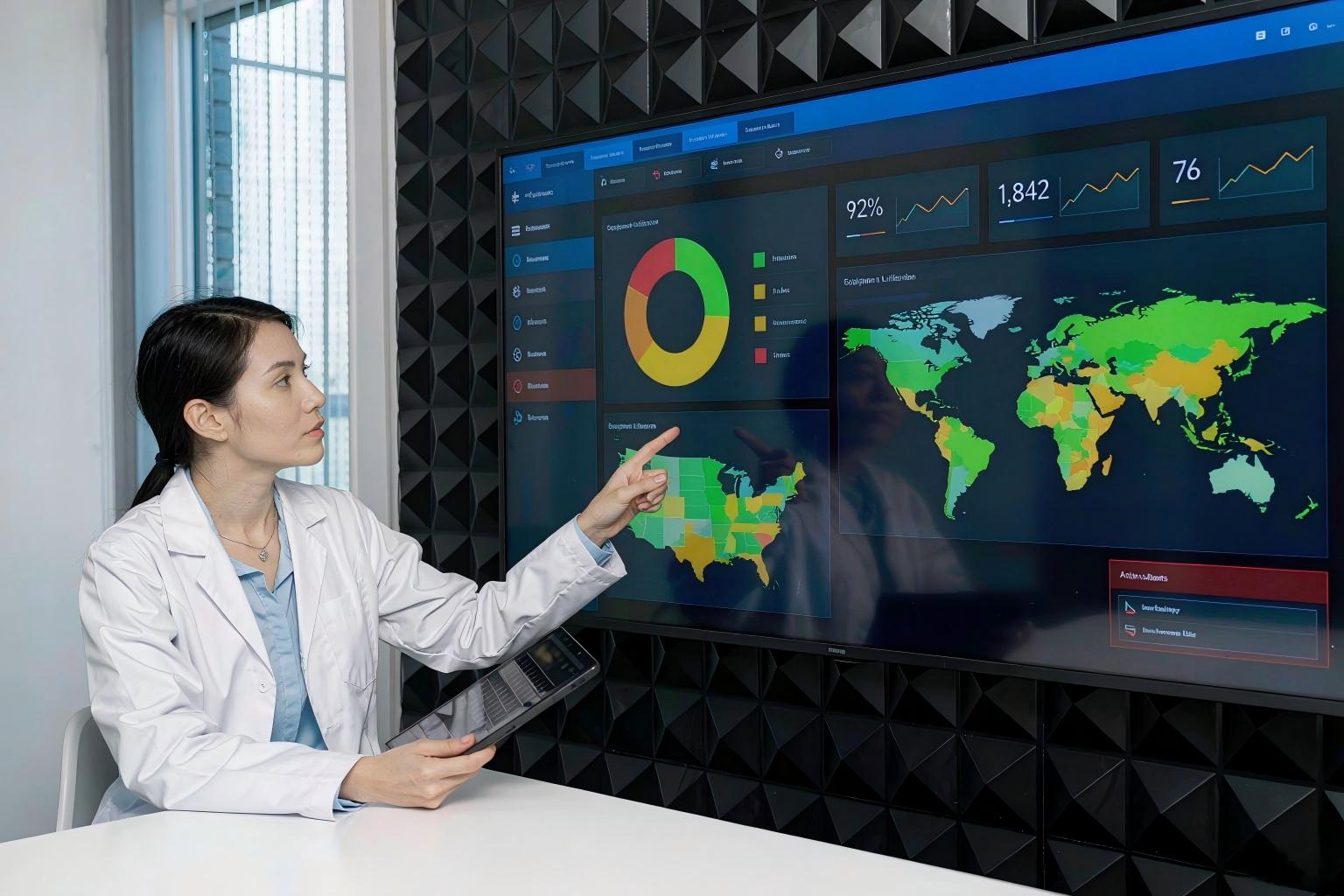
Fig. 2 — With item-level data, the command center sees location, utilization and maintenance status of every asset class in real time.
Capability | Barcode | HF / NFC wristband | Active RTLS | UHF RFID |
Identification | Item by item, line of sight | Single tag, <10 cm | Real-time location | Contactless, bulk, long range |
Bulk reading | No | No | Per-tag beacons | Hundreds of tags per second |
Battery / maintenance | None | None | Battery every 1–3 years | None (passive) |
Sterilizable tags | Paper labels fail | Limited | Bulky | Autoclave-rated tags available |
Cost per item | ≈0 | $0.5–3 | $40–100 per tag | $0.3–15 depending on form |
Best fit | Static records | Patient identity | 20–50 critical assets | Thousands of assets, item-level |
Conclusion: passive UHF is the only technology that combines bulk reading, zero battery maintenance, sterilization-rated tags and a per-item cost low enough to tag every instrument and container. Active RTLS remains a useful complement for the 20–50 truly critical assets that need continuous location; UHF covers the other thousands at 1% of the cost.
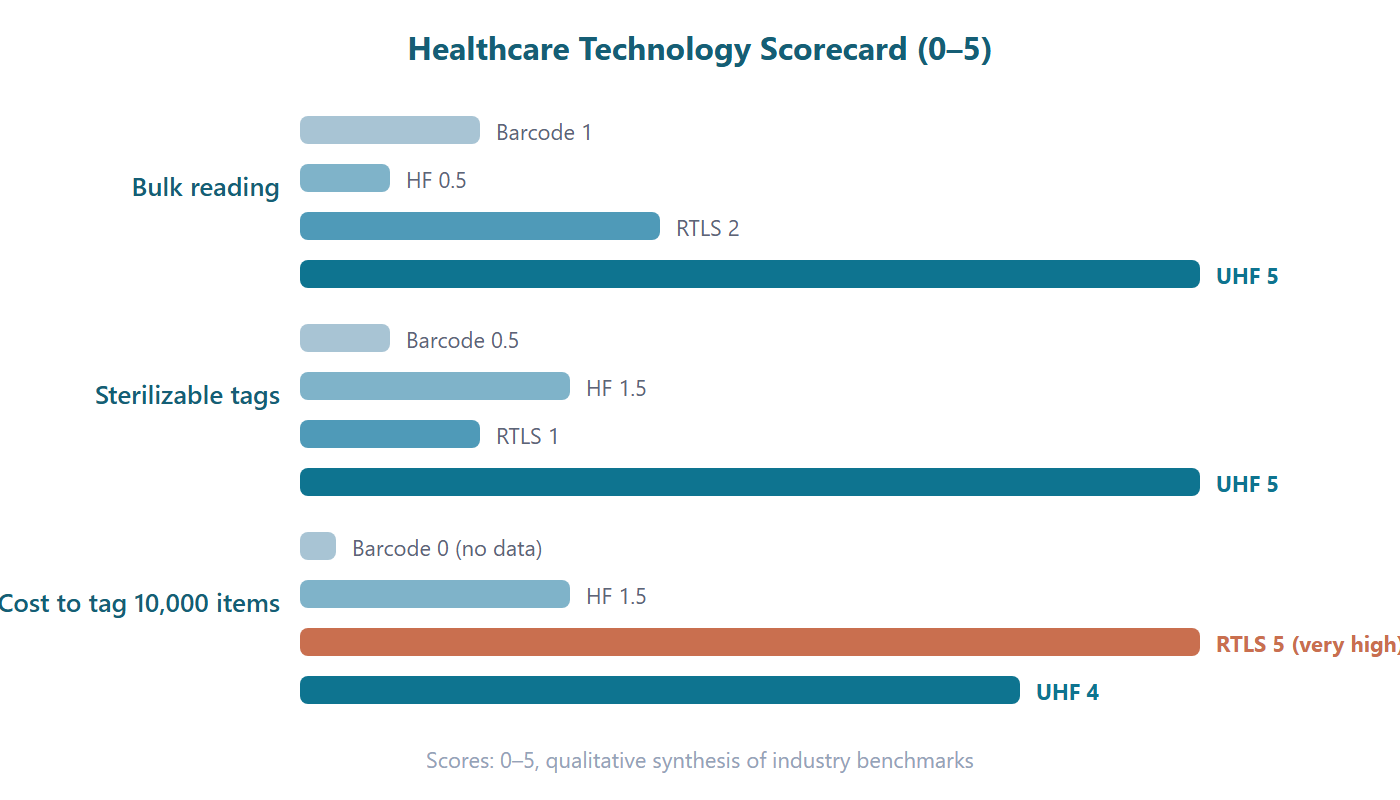
Fig. 3 — Capability scorecard: passive UHF RFID is the only option covering bulk reading, sterilization-rated tags and affordable per-item economics.
The solution follows a four-tier architecture: identity, capture, edge and platform. Hardware is brand-agnostic and reads are aggregated at an in-hospital edge server, which integrates with existing systems — HIS, asset management (CMMS / EAM), CSSD tracking, pharmacy and lab systems — through standard APIs. No clinical system is rebuilt.
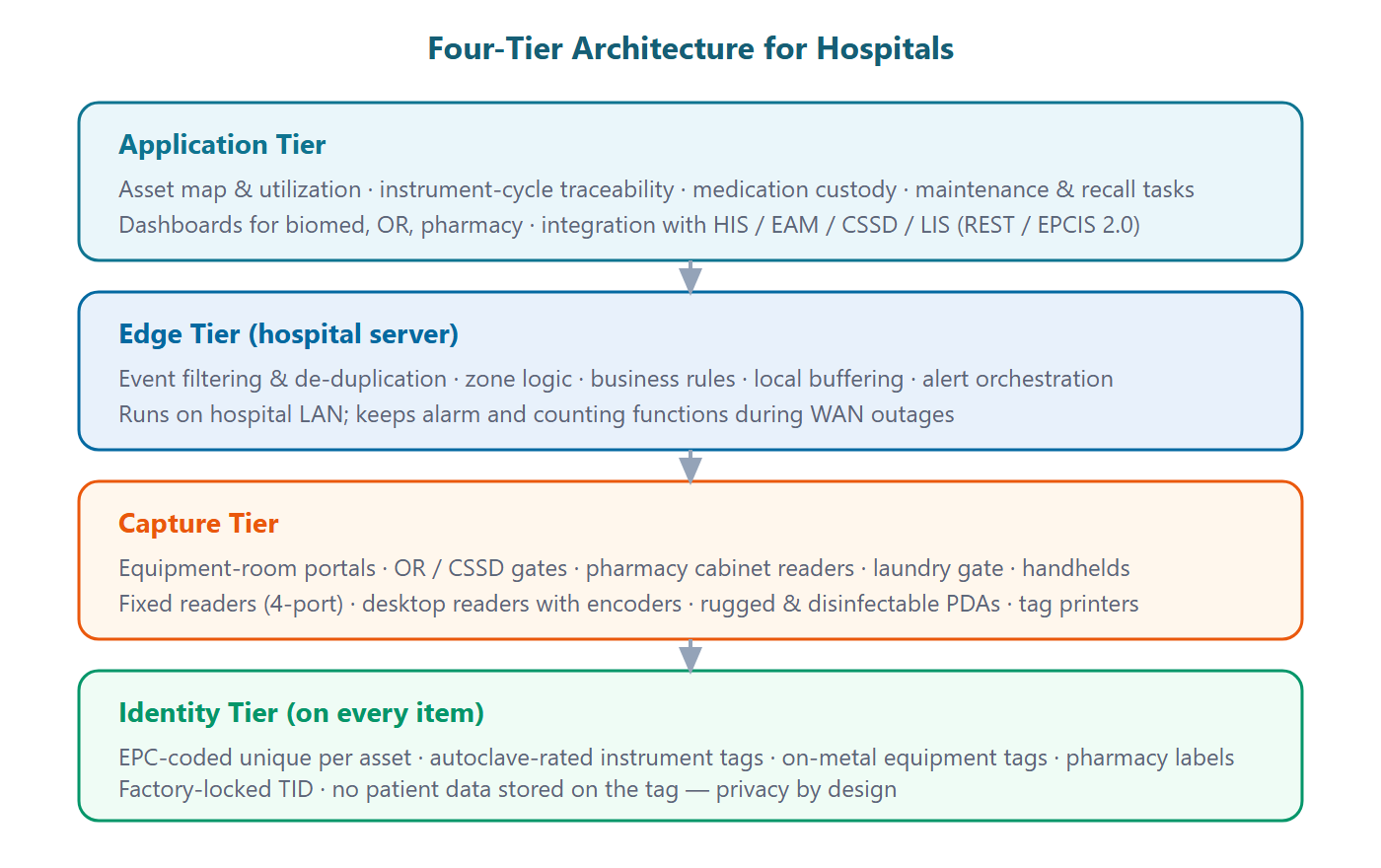
Fig. 4 — Architecture: the full data path from tag to application, with all devices aggregated at the hospital edge and exposed through open APIs to existing clinical systems.
Healthcare puts unusual demands on tags: autoclave cycles at 134°C, disinfectant wipe-downs, metal instrument trays, and proximity to patients. The tag strategy is therefore divided by item class, with medical-grade certification as the entry criterion.
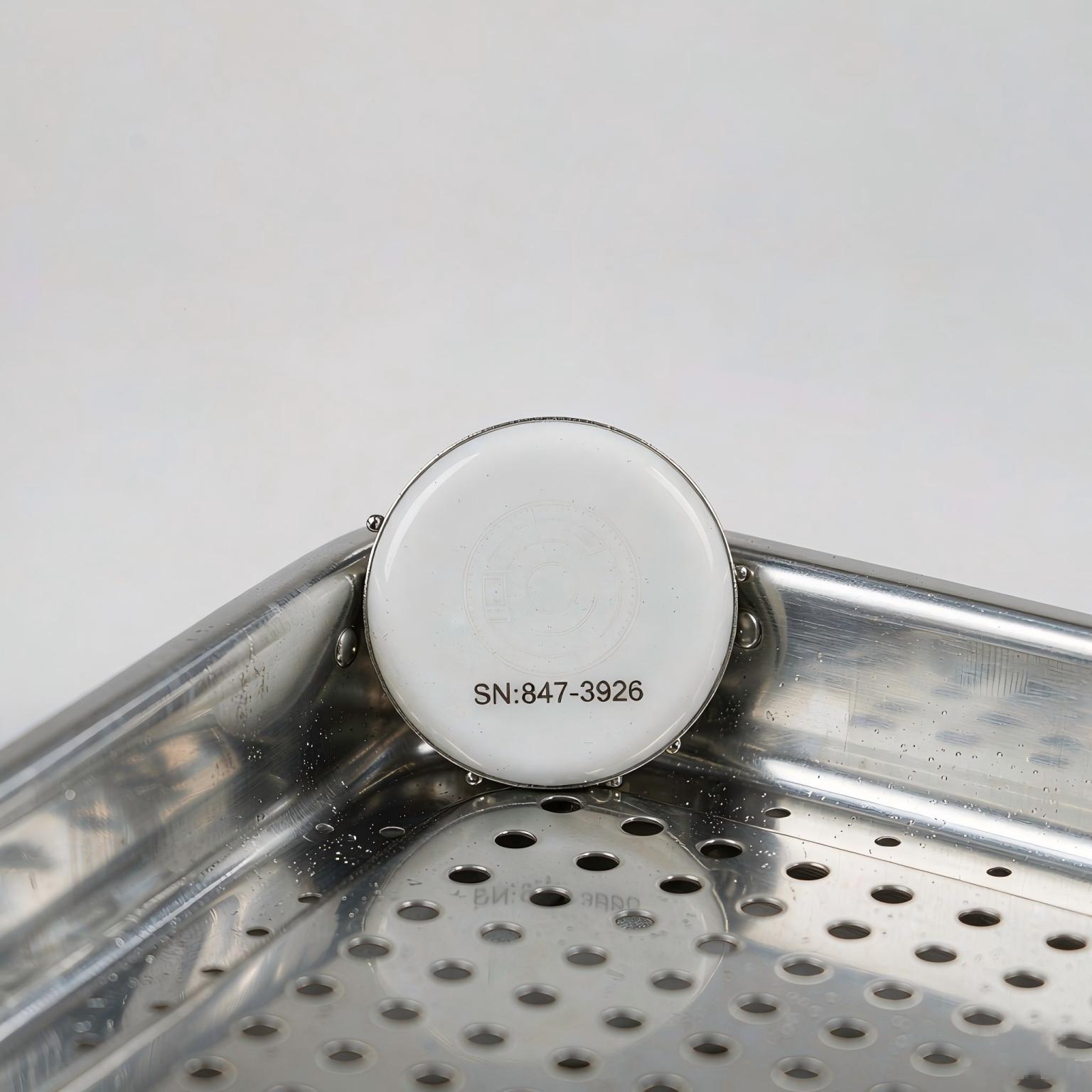
Fig. 5 — An autoclave-rated ceramic RFID tag on a surgical instrument tray: survives thousands of 134°C sterilization cycles and strong detergents.
Tag type | Best-fit items | Unit cost (USD) | Notes |
Autoclave-rated ceramic tag (recommended for instruments) | Surgical trays, instrument sets, endoscopes | 4–15 | Rated for repeated 134°C steam cycles; 5–10 year life |
On-metal equipment tag | Infusion pumps, monitors, defibrillators, wheelchairs | 1.5–5 | IP67, disinfectant-proof, 5+ year life |
Medical label inlay | Medication trays, specimen containers, blood bags* | 0.10–0.30 | Print-and-encode at issue; read through packaging |
Laundry / linen tag | Scrubs, bed linen, curtains | 0.8–2.0 | 200+ wash cycles at 90°C |
Tote / transport box tag | Specimen transport, CSSD carts, pharmacy totes | 1.5–4 | Container-level custody chain |
*Blood bags use dedicated blood-bank RFID solutions with temperature logging; this plan covers custody tracking only.
• Coding standard: GS1 SGTIN-96 / GIAI mapped to the asset register and the instrument master, so every item is unique across the hospital group;
• Safety rule: tags carry no patient-identifiable data — the tag holds only an identity key; sensitive records stay inside HIS/EAM behind access control (privacy by design);
• Certification rule: only tags with documented biocompatibility / sterilization ratings enter OR, CSSD and patient-adjacent zones.
Read points are placed where items already pass — lifts, doors, gates and counters — so capture is automatic and staff change nothing about their routines. A typical deployment covers six zones.
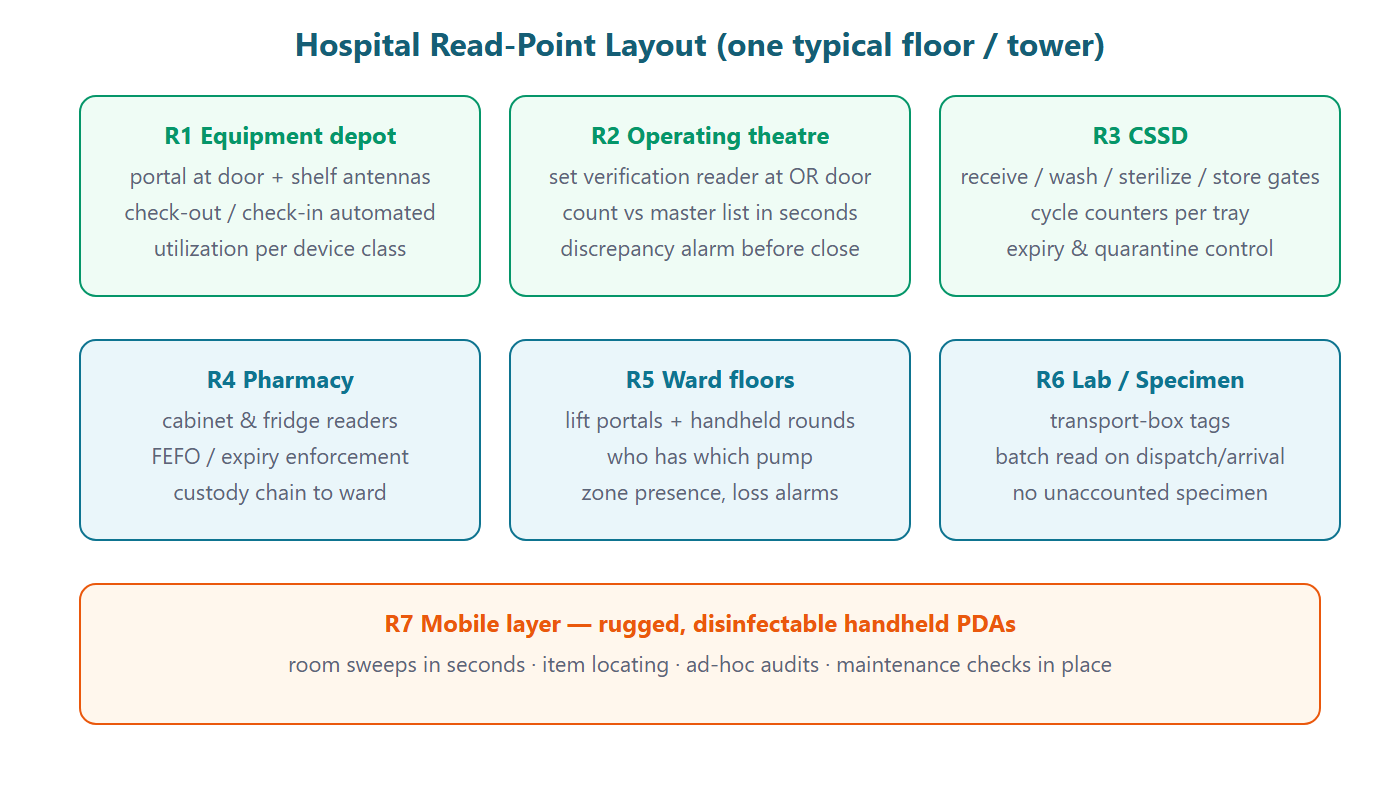
Fig. 6 — Hospital zone layout: six fixed read-point families plus a mobile handheld layer cover the full lifecycle of tagged items.
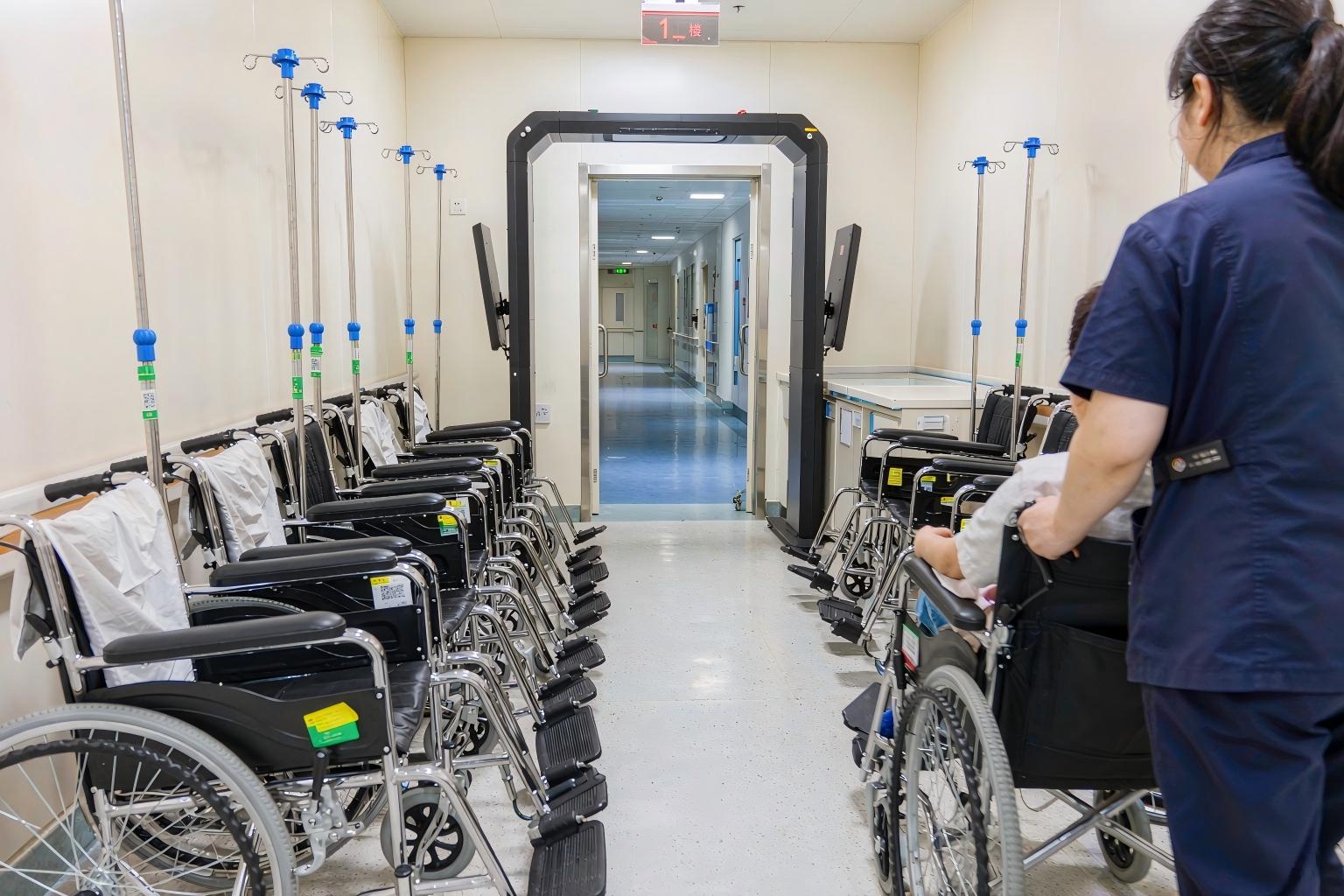
Fig. 7 — Equipment depot portal: every device passing the doorway is logged automatically — check-out, check-in and loss alarms without any staff action.
Read point | Location | Recommended hardware | Business role |
R1 Equipment depot | Central equipment room | Portal + shelf antennas + 4-port reader | Automated check-out/in, utilization, loss alarms |
R2 Operating theatre | OR entrance / corridor | Desktop or portal reader | Set verification before and after surgery |
R3 CSSD gates | Receive / wash / sterilize / store | Zone readers per stage | Sterilization cycle traceability, quarantine control |
R4 Pharmacy | Cabinets, fridges, dispensing counter | Shelf & desktop readers | FEFO enforcement, expiry alerts, custody chain |
R5 Ward lifts & doors | Lift lobbies, ward entrances | Compact portals | Zone presence, drift detection, loss alarms |
R6 Lab / specimen | Transport desk | Desktop reader | Batch custody of tagged transport boxes |
R7 Handheld layer | Mobile across all zones | Disinfectable rugged PDA | Room sweeps, locating, audits, PM checks |
Placement rules: keep readers ≥2 m from sensitive imaging equipment (MRI/CT) and from the patient bedside; verify EMC compliance with active implanted devices per local regulation; use reduced transmit power in patient-adjacent corridors; antenna tilt toward doorways to minimise corridor cross-reads.
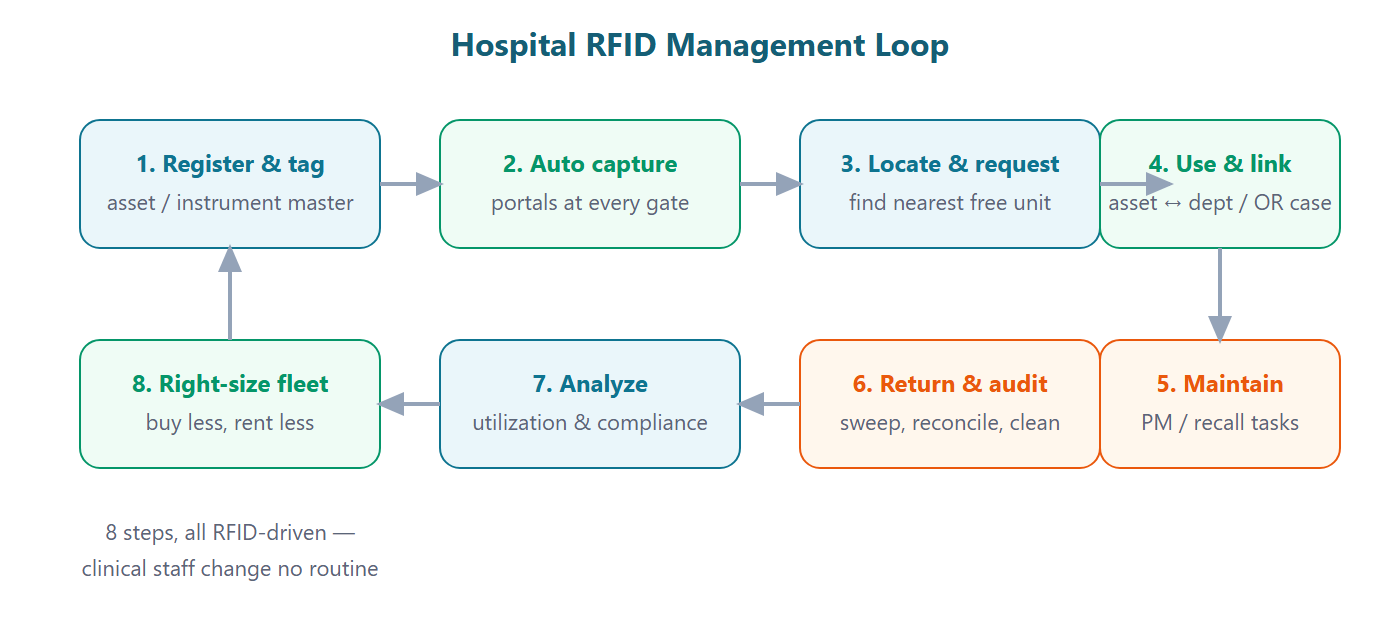
Fig. 8 — Eight core steps of hospital asset management, all driven automatically by RFID; clinicians handle only exceptions.
Every device leaves the depot through the portal: who took it, when and for which ward is logged automatically. On return the same sweep closes the loop and flags devices overdue for cleaning or PM. The depot becomes a self-auditing pool instead of a credibility contest.
The handheld shows the nearest free unit of the requested class; a room sweep reads every tagged device in seconds. Search time falls by ~90%, and “borrow without returning” collapses because every hand-off is recorded.
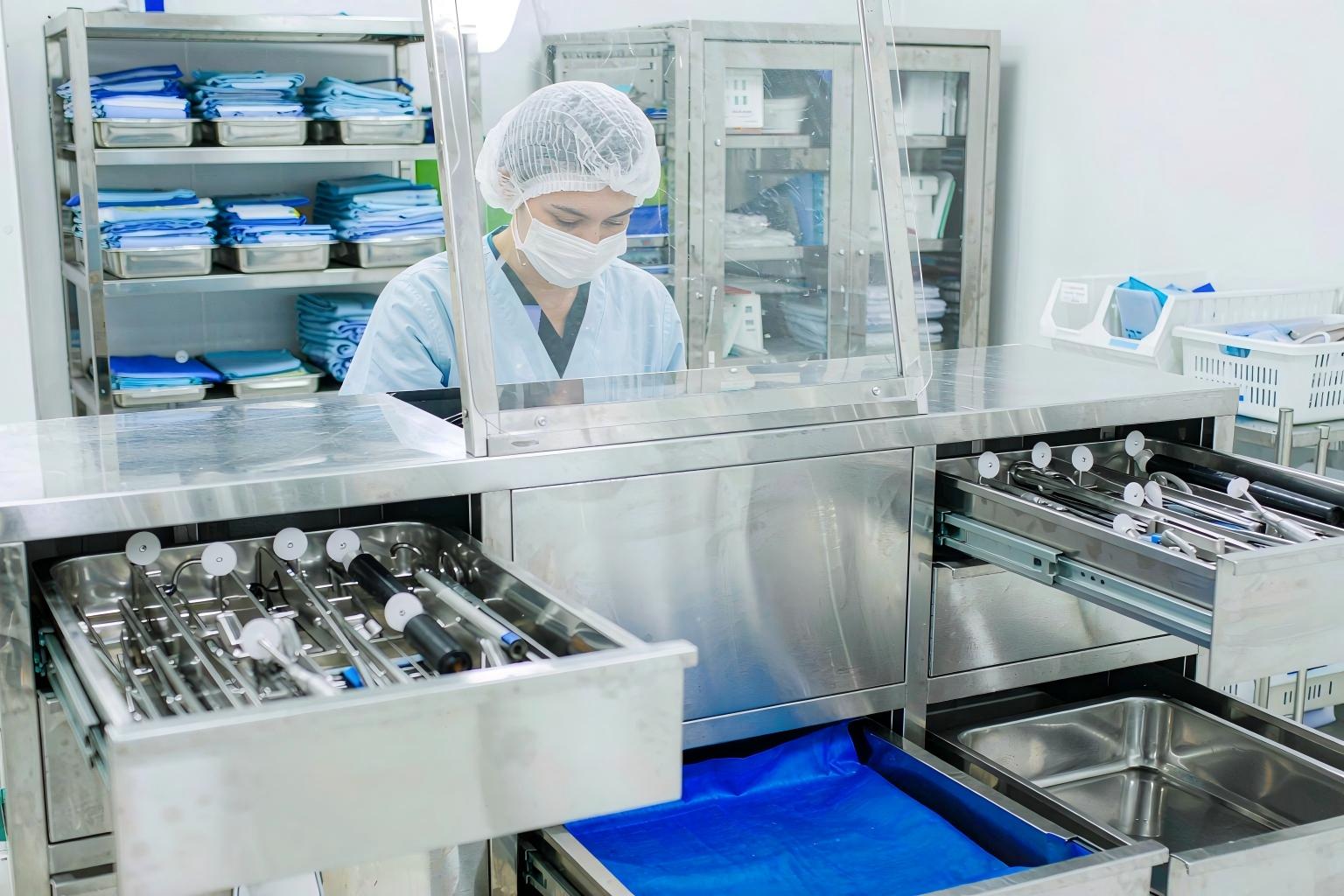
Fig. 9 — CSSD: each tray carries an autoclave-rated tag recording every wash, sterilization and use cycle across its lifetime.
The tag on each tray records wash, sterilization and use cycles. At the OR door a single read verifies the set against the case list in seconds — before the patient is draped. Post-op, the same read closes the count; any discrepancy is alarmed immediately with item-level detail, eliminating the classic mid-surgery “recount” delay.

Fig. 10 — Pharmacy: fridge and cabinet readers enforce FEFO and expiry rules; every transport box read extends the custody chain to the ward.
Tagged trays and containers are read in batches at fridges, cabinets and transport desks. The system enforces first-expiry-first-out automatically, alerts on items nearing expiry, and keeps an unbroken custody chain from pharmacy to ward or from ward to lab — even under peak workload, because capture is passive.
Because the fleet is always located, PM and calibration tasks are dispatched to where the device actually is, and recall campaigns complete in hours instead of weeks. Overdue-PM devices are flagged the moment they pass any portal — an overdue defibrillator can no longer hide.
With per-device-class utilization data, capital requests are settled by evidence: under-used owned fleets replace rentals first, over-requested departments get consolidated, and the hospital buys for measured demand — typically cutting rental spend 25–40% in year two.
Zone readers at receive, wash, sterilize, store and dispatch give every tray a complete lifecycle record: cycle counts, quarantine status, expiry of sterile shelf life and inter-department custody. Sets are never sent to an OR past expiry or into service after an incomplete cycle.
Set verification at the OR door, automatic closure of the surgical count, and a live view of which sets are en route from CSSD. The OR gains minutes per case and a defensible record for every procedure.
The ED is the highest-churn environment: portal coverage at ambulance bays and resus rooms keeps track of the devices everyone borrows in a crisis, while handheld sweeps close the shift-end gap that manual whiteboards never do.
Batch custody reads at every transfer point, FEFO enforcement in fridges, and instant answers to “where is that transport box now” — the traceability layer regulators increasingly ask for.
Metric | Definition | Operational action |
Fleet utilization | In-use hours ÷ available hours, per device class | Rebalance pools; convert idle owned units to rental reduction |
Search & response time | Request → device in hand | Target <5 min; reposition depot stock by heat map |
Sterilization cycle compliance | Sets with complete cycle records ÷ sets used | Target 100%; investigate incomplete-cycle usage immediately |
Count discrepancy rate | OR sets alarmed ÷ sets used | Drill into tray types and steps; redesign packing workflow |
PM on-time rate | PM completed on schedule ÷ due | Target ≥98%; overdue units flagged at every portal |
Expiry waste | Value of expired medication ÷ issued value | FEFO enforcement plus stock-level tuning |
These metrics flow into biomed, OR and pharmacy dashboards — turning what was anecdotal complaint into a continuous improvement loop with measurable baselines.
Item | Clinic / 100 beds | General hospital 300–500 beds | Teaching hospital 800+ beds |
Equipment depot portal R1 | 1 desktop reader | 1 portal + shelf antennas | 2 portals + smart shelves |
OR verification R2 | — | 1–2 readers | 1 per theatre cluster |
CSSD zone readers R3 | — | 3 gates | 5 gates + conveyor |
Pharmacy readers R4 | 1 desktop | 2–4 shelf/desktop | Cabinet system |
Ward lift portals R5 | — | 4–8 compact portals | 12+ portals |
Lab / specimen R6 | — | 1 desktop | 2–3 desktops |
Handhelds R7 | 1 | 3–5 | 8–15 |
Tag printers / encoders | 1 | 2 | 4+ |
Edge server | 1 (virtual) | 1 physical | 2 (redundant) |
Hardware budget (USD) | 8k–15k | 38k–75k | 110k–220k |
Note: indicative ranges covering readers, antennas, portals, handhelds, tag printers and installation/commissioning — excluding tags and software licences. Instrument tags dominate the tag budget for surgical deployments; final pricing follows an on-site RF survey.
Model: a 500-bed general hospital, 3,000 mobile assets, 400 instrument sets, USD 3.2 million annual equipment rental spend (deployment: hardware ≈ USD 60k, software ≈ USD 25k, tags ≈ USD 45k year one).
Benefit | Basis | Annual value (USD) |
Rental spend reduction | Utilization +30% on owned fleet; rentals −30% on measured demand | 96k–128k |
Search time recovered | 800 clinical staff × 20 min/shift × 220 shifts × $0.5/min equivalent | Modelled separately (capacity) |
Loss & replacement avoided | Mobile asset loss 12% → 3% on USD 9 m fleet value at 8%/yr | 81k |
Count & delay reduction | 15–20 min per set × 400 sets/week × faster OR turnover | 35k–60k |
Expiry waste reduction | Medication expiry waste −50% on USD 180k baseline | 90k |
Total | ≈ 300k–360k |
Conclusion: first-year investment of roughly USD 130k against annual benefits of USD 300k+ gives a payback period of 12–18 months — before counting the capacity value of recovered nursing time and the compliance value of complete instrument traceability. At group scale the platform is shared and per-hospital cost falls further.
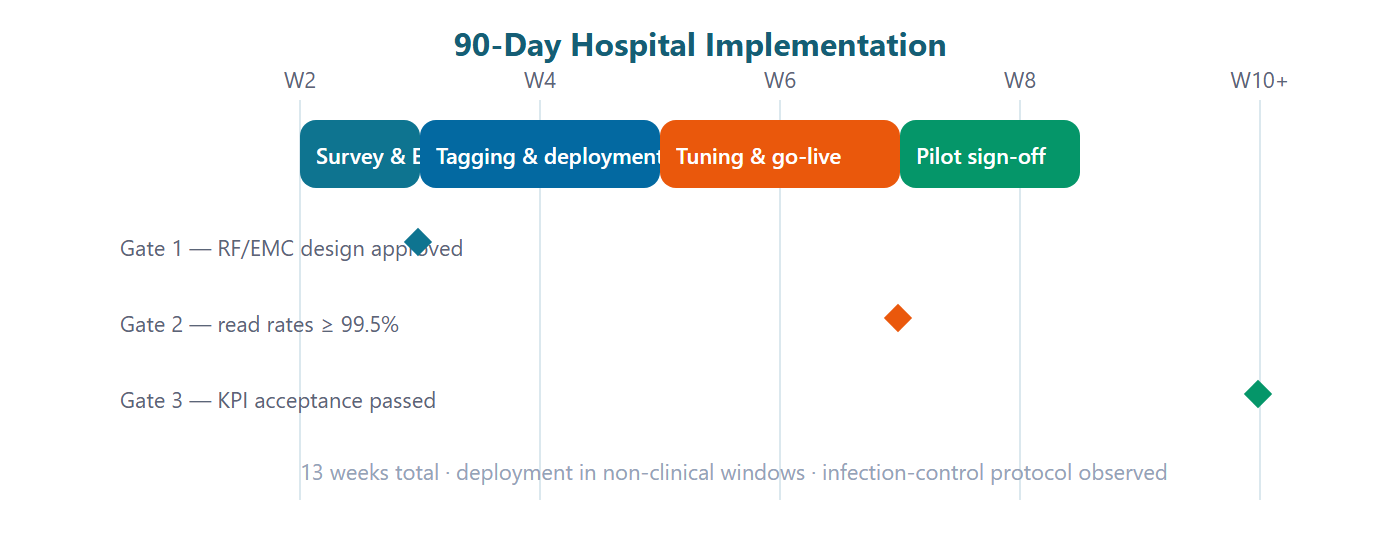
Fig. 11 — 90-day roadmap: a single-department pilot completes in 13 weeks, with three milestones acting as stage gates.
• Week 1–2 (survey and design): RF site survey, EMC verification near imaging suites, read-point design, asset/instrument master alignment;
• Week 3–6 (tagging and deployment): tag application for pilot scope (equipment pool + instrument sets), portal and zone installation, edge server and EAM/HIS interfaces;
• Week 7–10 (tuning and go-live): read-rate tuning, cut-over of the core workflows, infection-control-compliant training and certification;
• Week 11–13 (pilot sign-off): two-week KPI observation, acceptance report, hospital-wide rollout plan.
• Portal read rate ≥ 99.5%; room-sweep read rate ≥ 99.9%;
• Instrument-set count verification in ≤10 seconds with zero false alarms over two weeks;
• Equipment request-to-hand time ≤ 5 minutes;
• 100% of pilot-zone staff certified; zero P1 incidents on clinical-system interfaces; infection-control sign-off obtained.
Risk | Scenario | Mitigation |
EMC with medical devices | Readers near monitoring, imaging or implanted devices | ≥2 m separation from sensitive equipment; reduced power in patient zones; EMC verification per IEC 60601-1-2 before go-live |
Infection control | Tags or handhelds as contamination vectors | Sealed IP67/autoclave-rated tags only; disinfectable handhelds; tag application inside validated cleaning workflow |
RF interference | Neighbouring zones, LED lighting, metal ceilings | Pre-deployment RF survey; four-channel planning; on-metal tags |
Portal cross-reads | Lift portals reading items two floors away | Zonal power, RSSI filtering, doorway geofencing |
Data & privacy | Misuse of staff location or asset movement data | Tags carry no patient data; movement logs restricted to operational roles; retention policy per hospital governance |
Network outage | Hospital LAN failure | Edge server buffers locally; alarms and counting keep running; auto backfill |
Operational recommendation: maintain a daily read-rate dashboard and a weekly inspection routine (antenna mounting, power calibration, tag consumables). A read rate below 99% raises a ticket — read rate is the leading indicator of overall system health.
Passive UHF readers transmit briefly and at moderate power, similar in class to walkie-talkies and Wi-Fi routers already used in hospitals. Standard practice is ≥2 m separation from sensitive equipment, reduced power in patient-adjacent zones, and an EMC verification per IEC 60601-1-2 before go-live. Tags themselves are passive and emit nothing.
Yes — purpose-built autoclave-rated ceramic and stainless tags survive thousands of cycles at 134°C and repeated disinfectant exposure. Ordinary paper label inlays do not, which is why the tag strategy is split by item class.
No. HF/NFC wristbands remain the standard for patient identity and bedside infusion matching. This solution manages things — equipment, instruments, medication containers — and can associate reads with patient encounters in HIS without storing patient data on the tag.
The platform tier exposes REST APIs and EPCIS 2.0 event subscriptions; mainstream HIS, EAM/CMMS, CSSD and pharmacy systems integrate through those interfaces. Existing workflows keep running — RFID adds the capture layer they never had.
One equipment depot, one OR/CSSD pair and one ward floor: about 300–500 assets and 100–200 instrument sets, one portal, three zone readers and two handhelds. That is enough to prove the KPIs in 13 weeks and justify hospital-wide rollout.
Hardware installation runs in non-clinical windows (evenings/weekends) and never interrupts care. A single-department pilot takes about 13 weeks; hospital-wide rollout proceeds zone by zone at roughly two zones per month.
Start with one equipment depot and one OR/CSSD pair: one portal, three zone readers, two handhelds, 500 assets and 200 instrument sets tagged. The exit gates are the thresholds in section 12 — once the data clears them, scale zone by zone using the configuration table in section 10.

Scan To Add

Scan To Add
Copyright © 2026 Shenzhen Zhishun Information Technology Co., Ltd All Rights Reserved.
Technical Support:SYSX





 182-7997-4925

 Home